










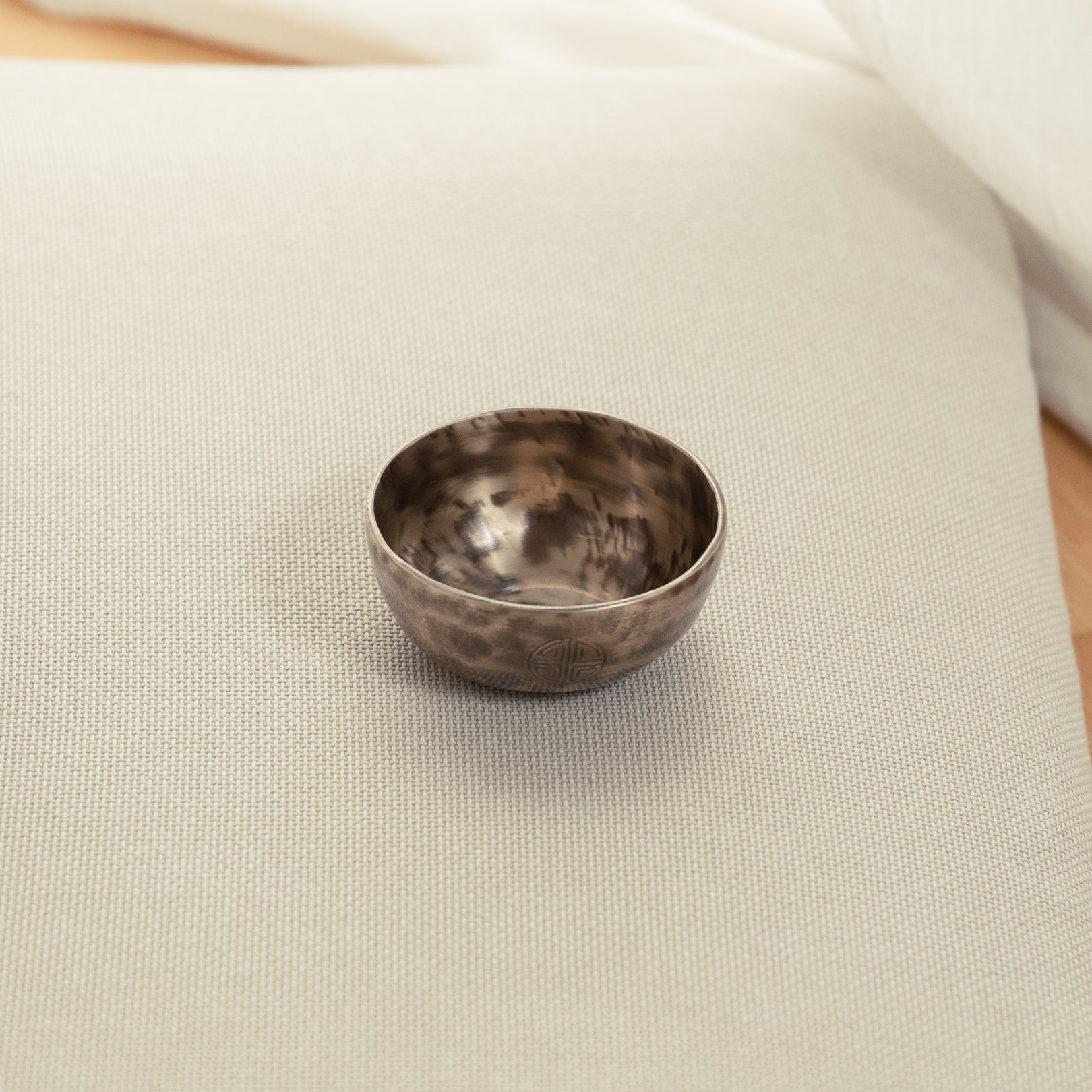
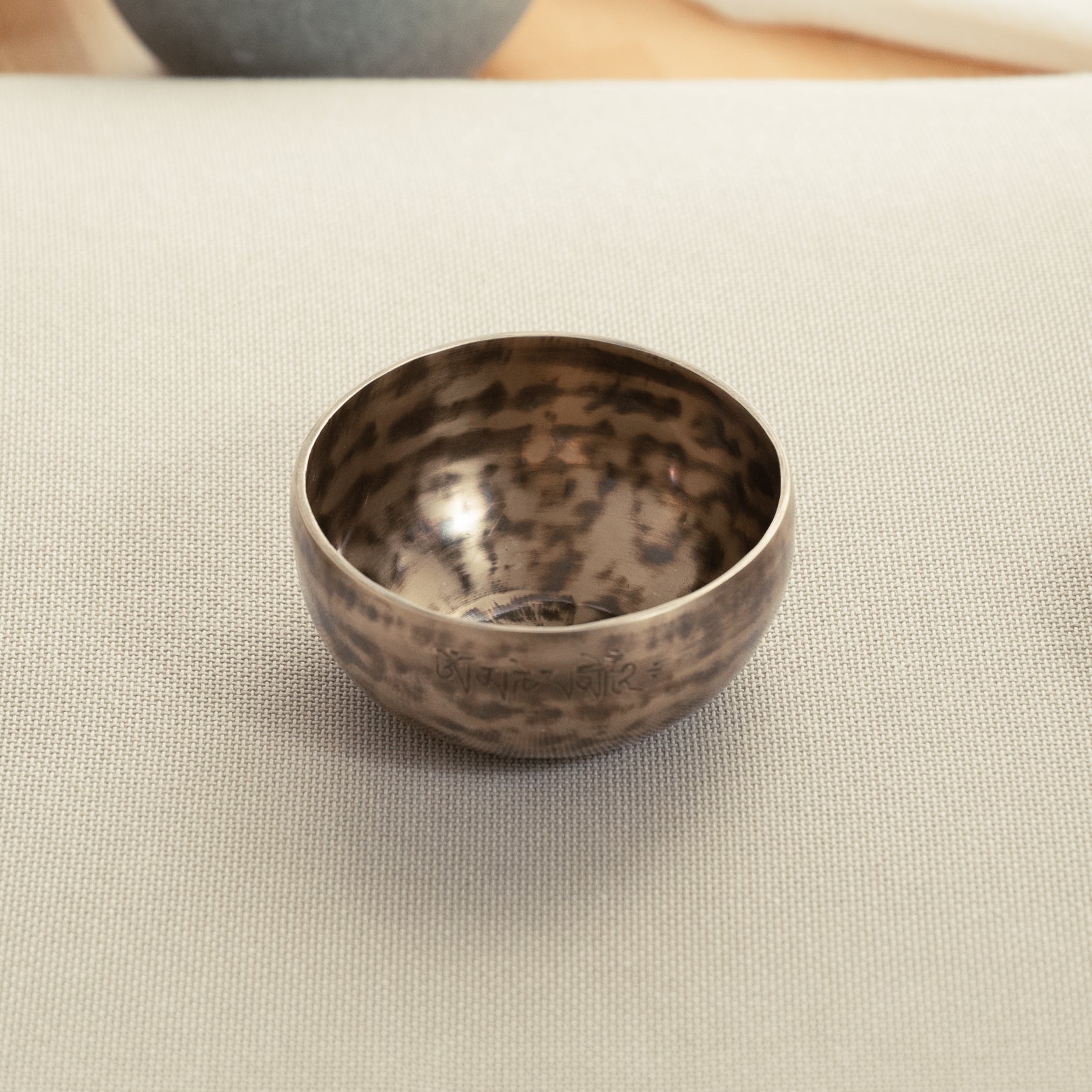
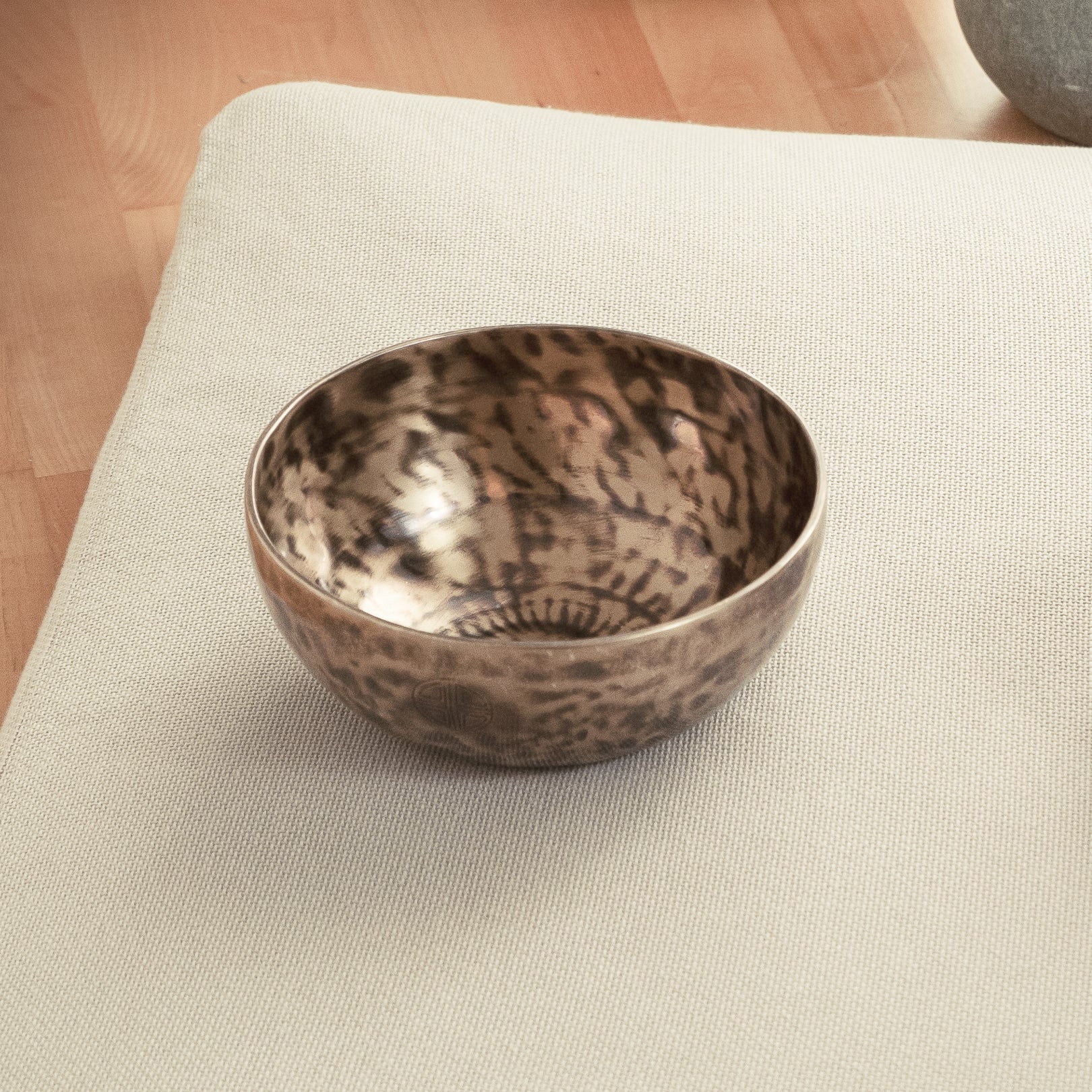
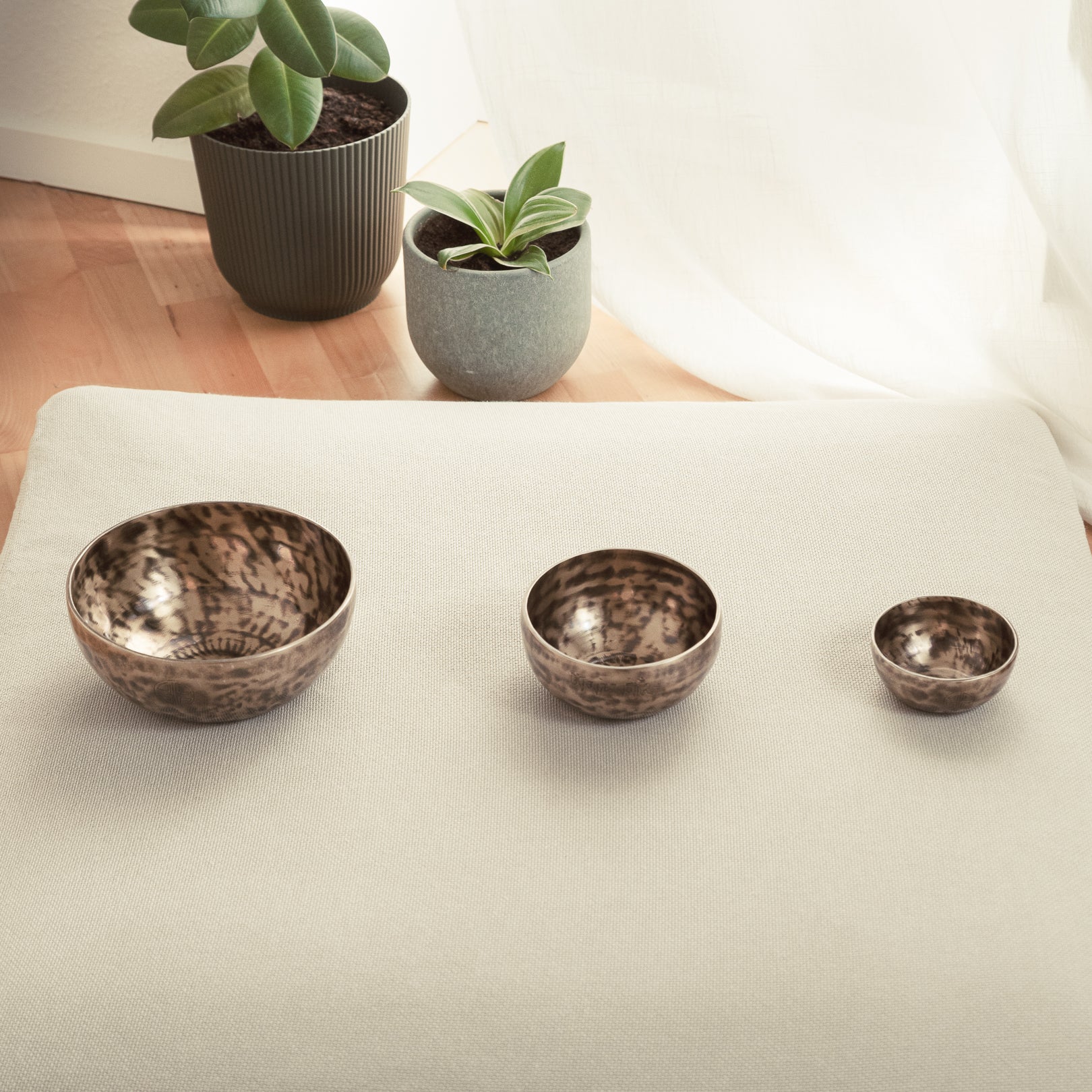
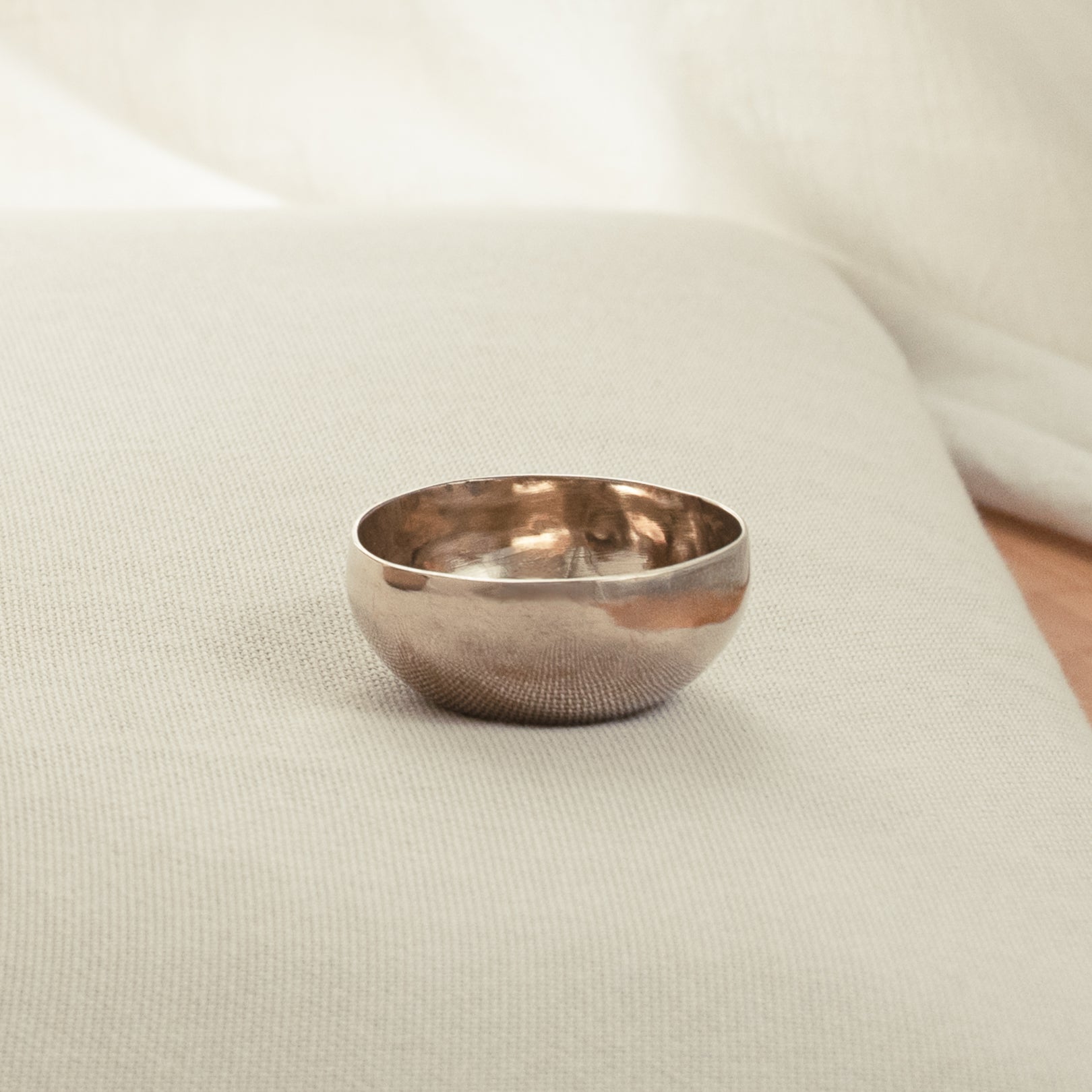
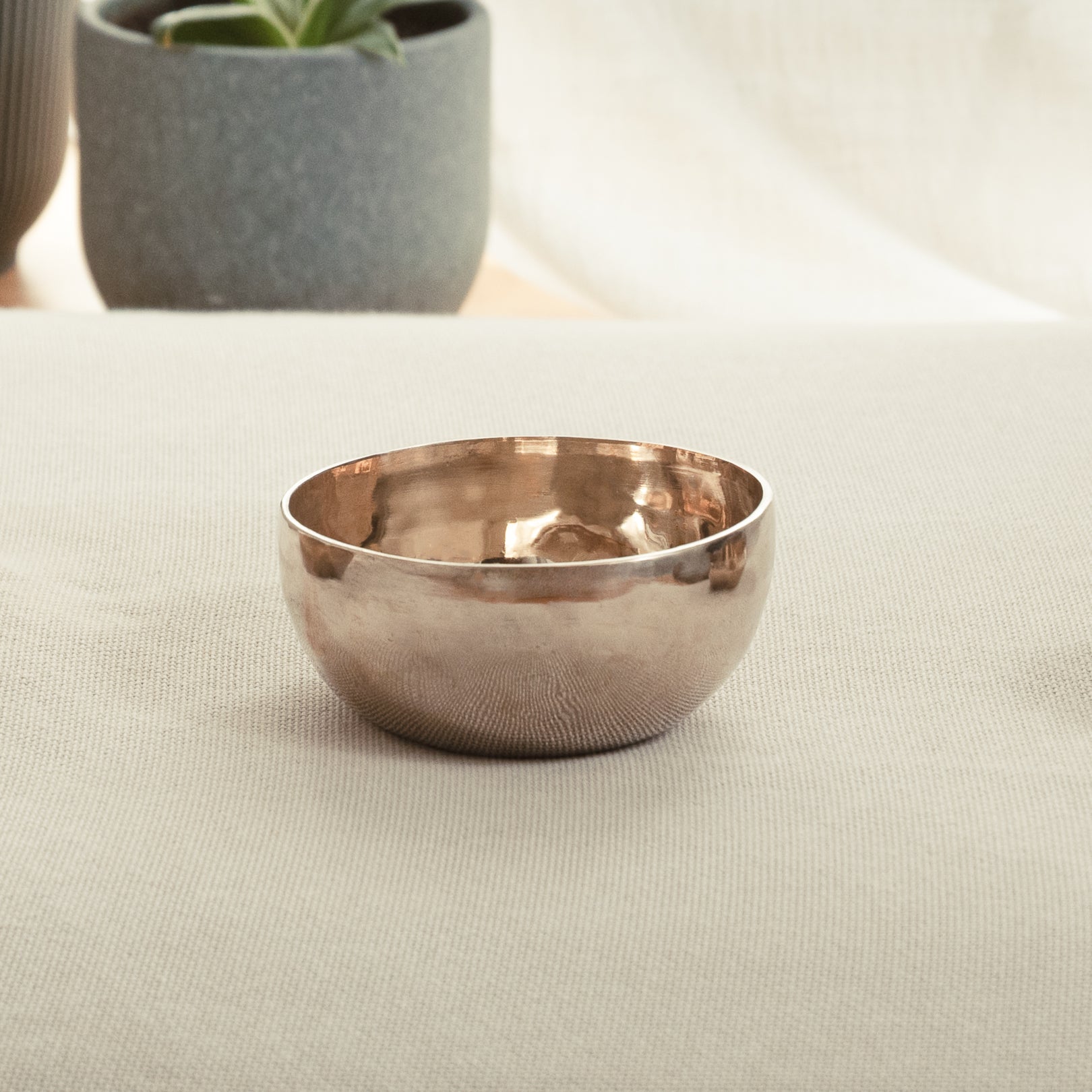
Understanding Singing Bowls
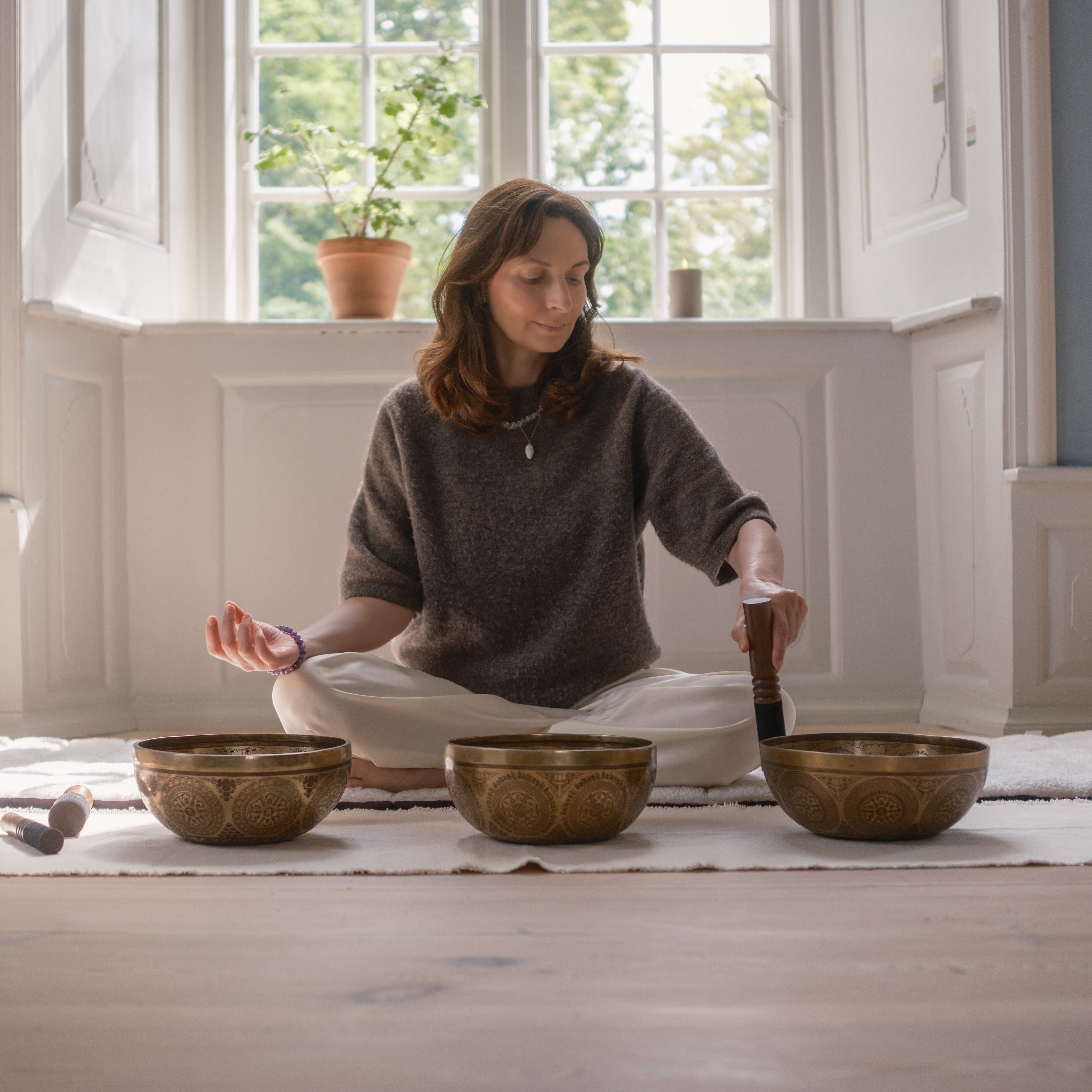
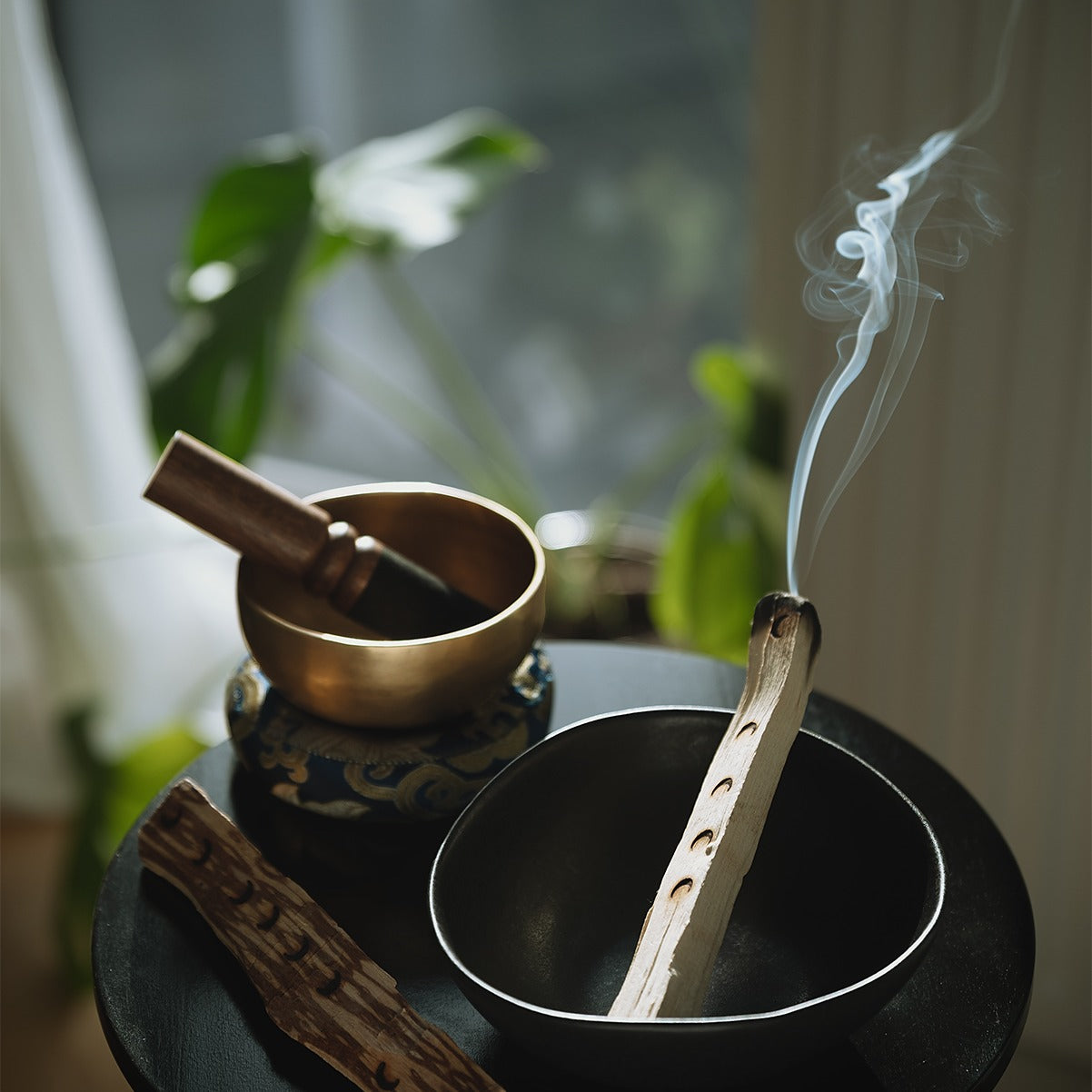
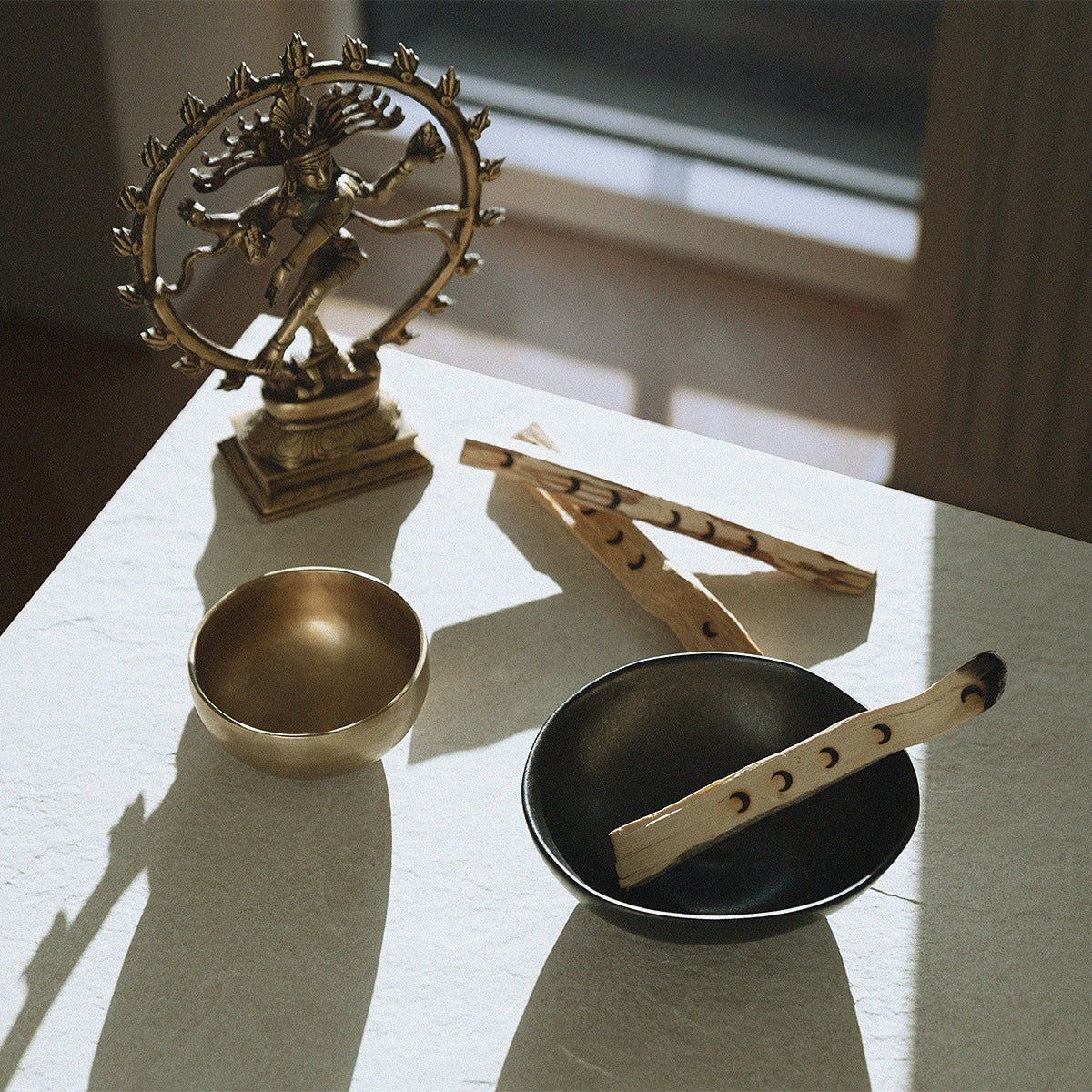
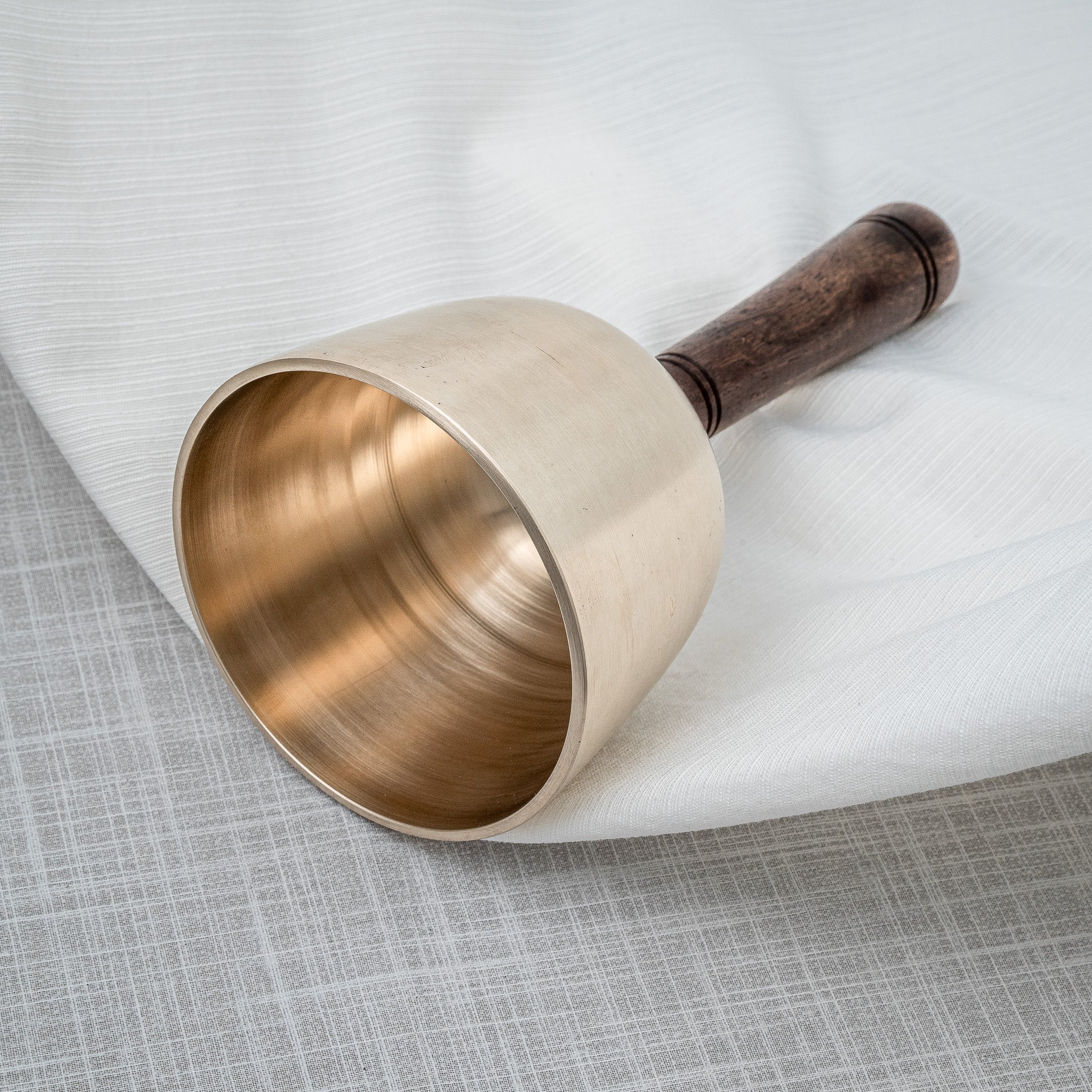
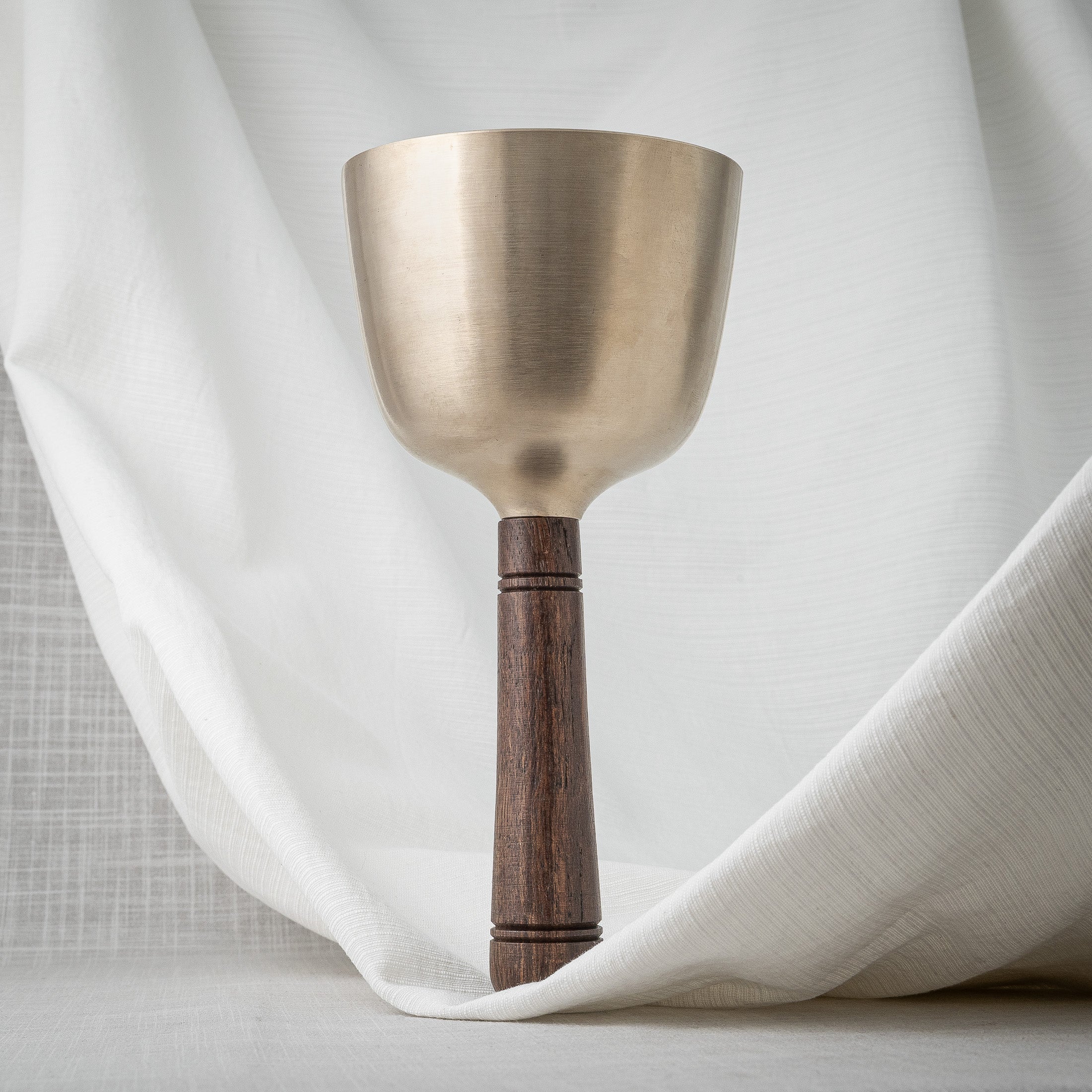
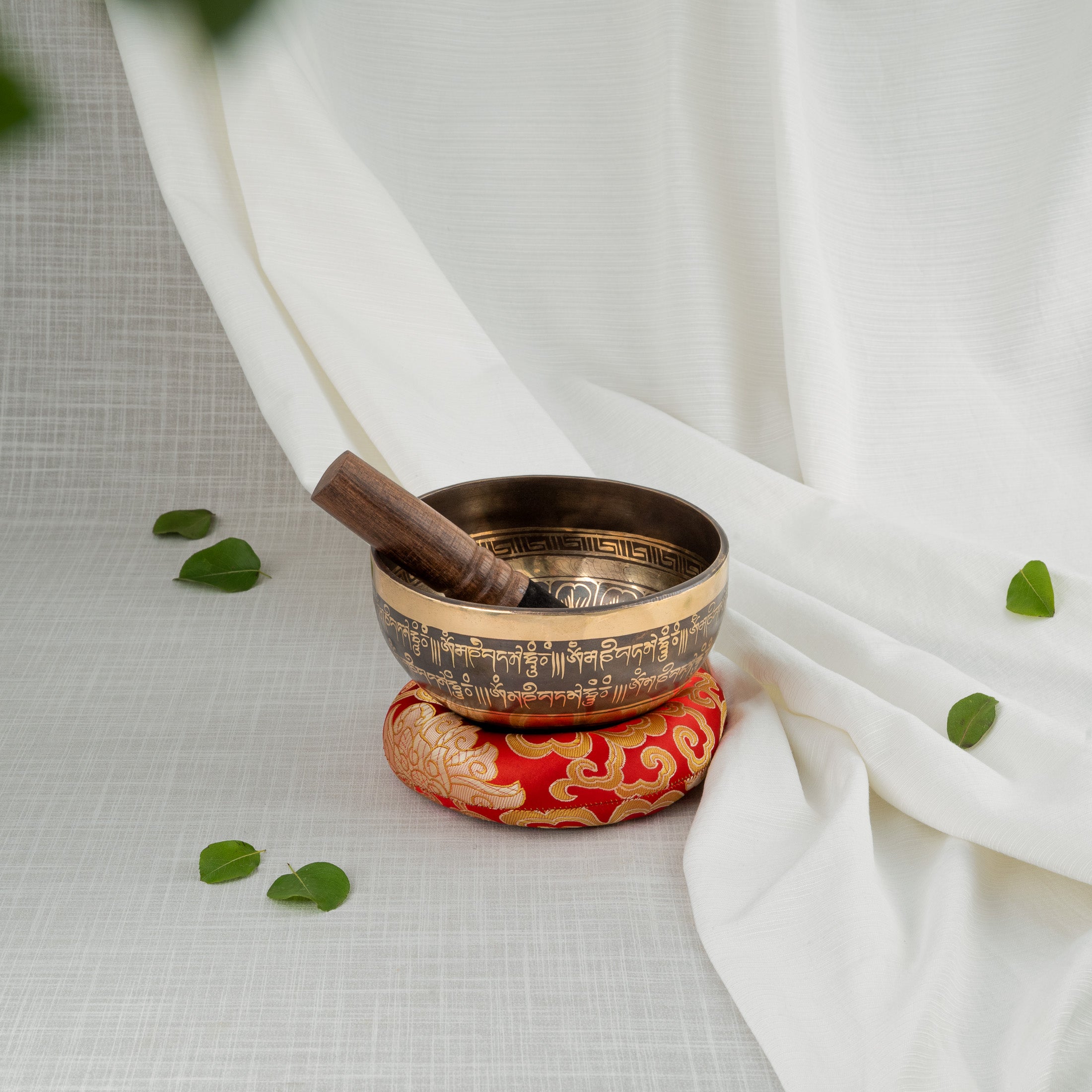
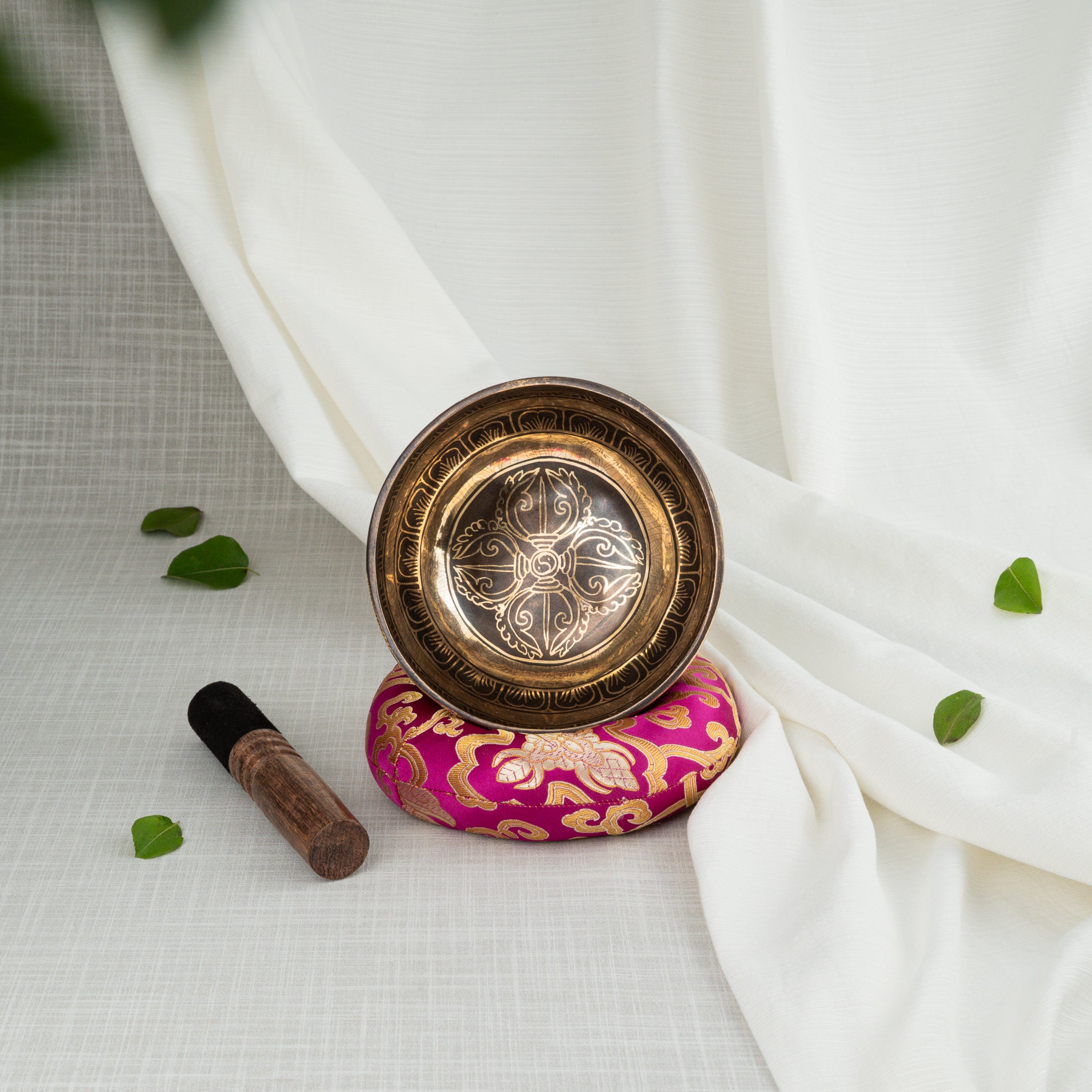
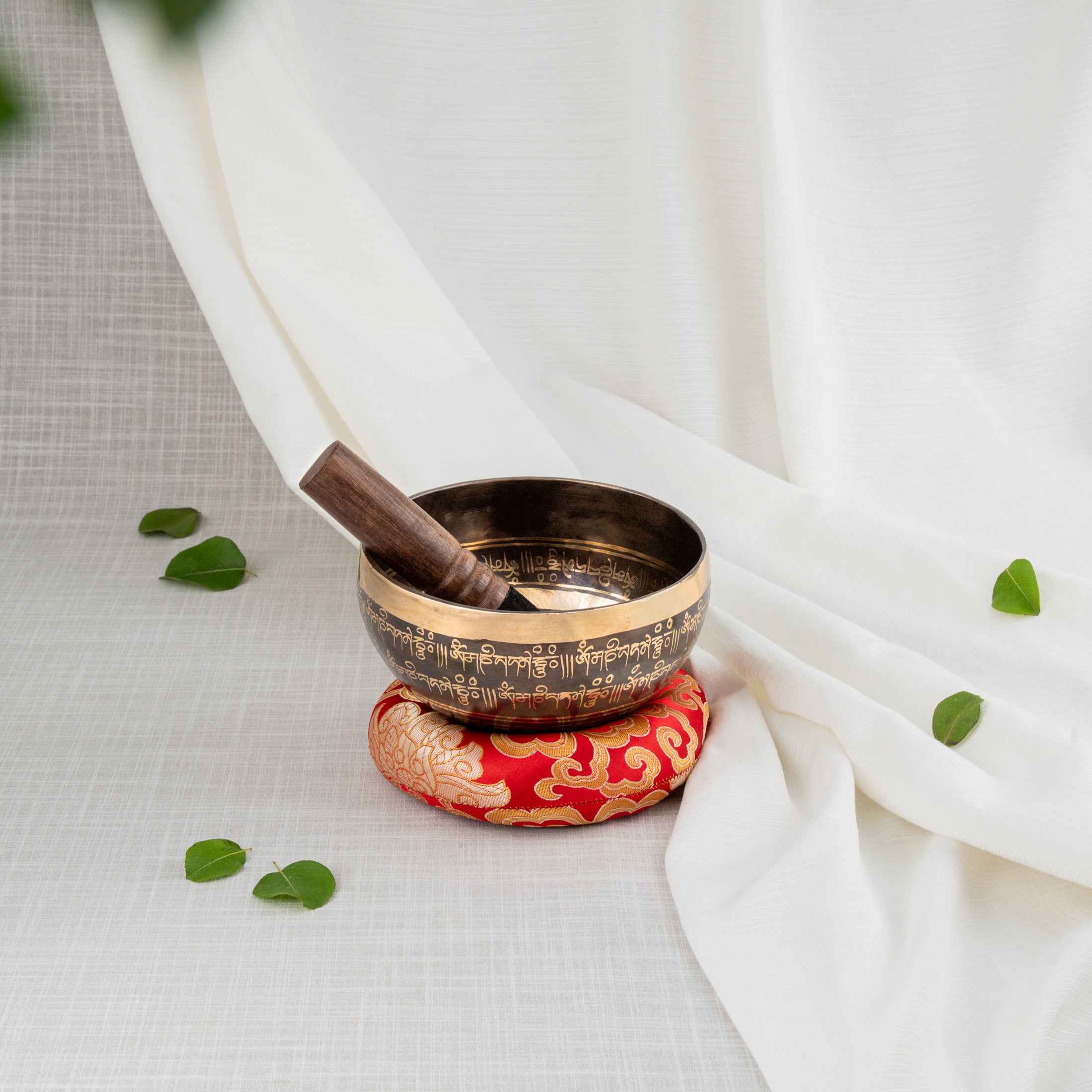
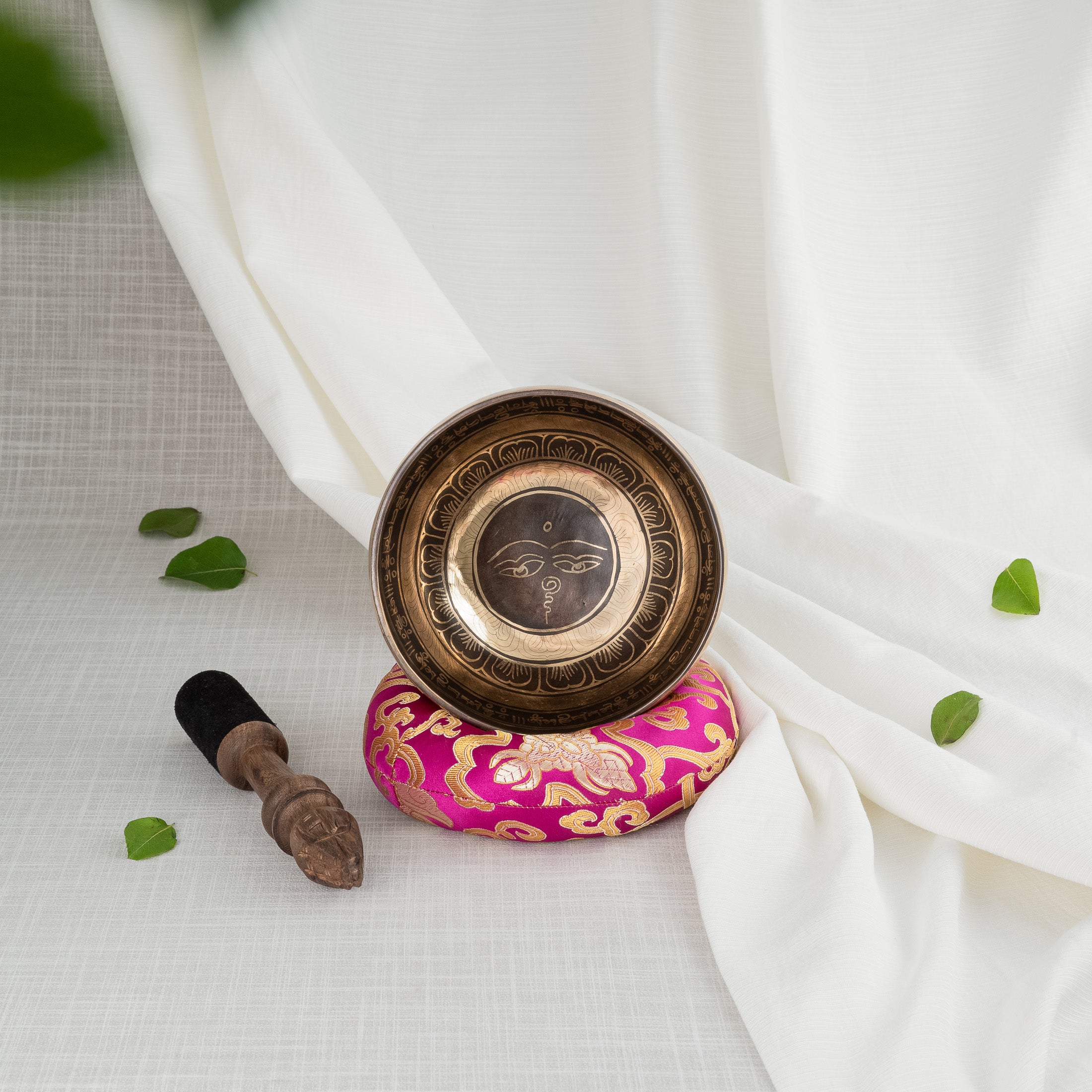
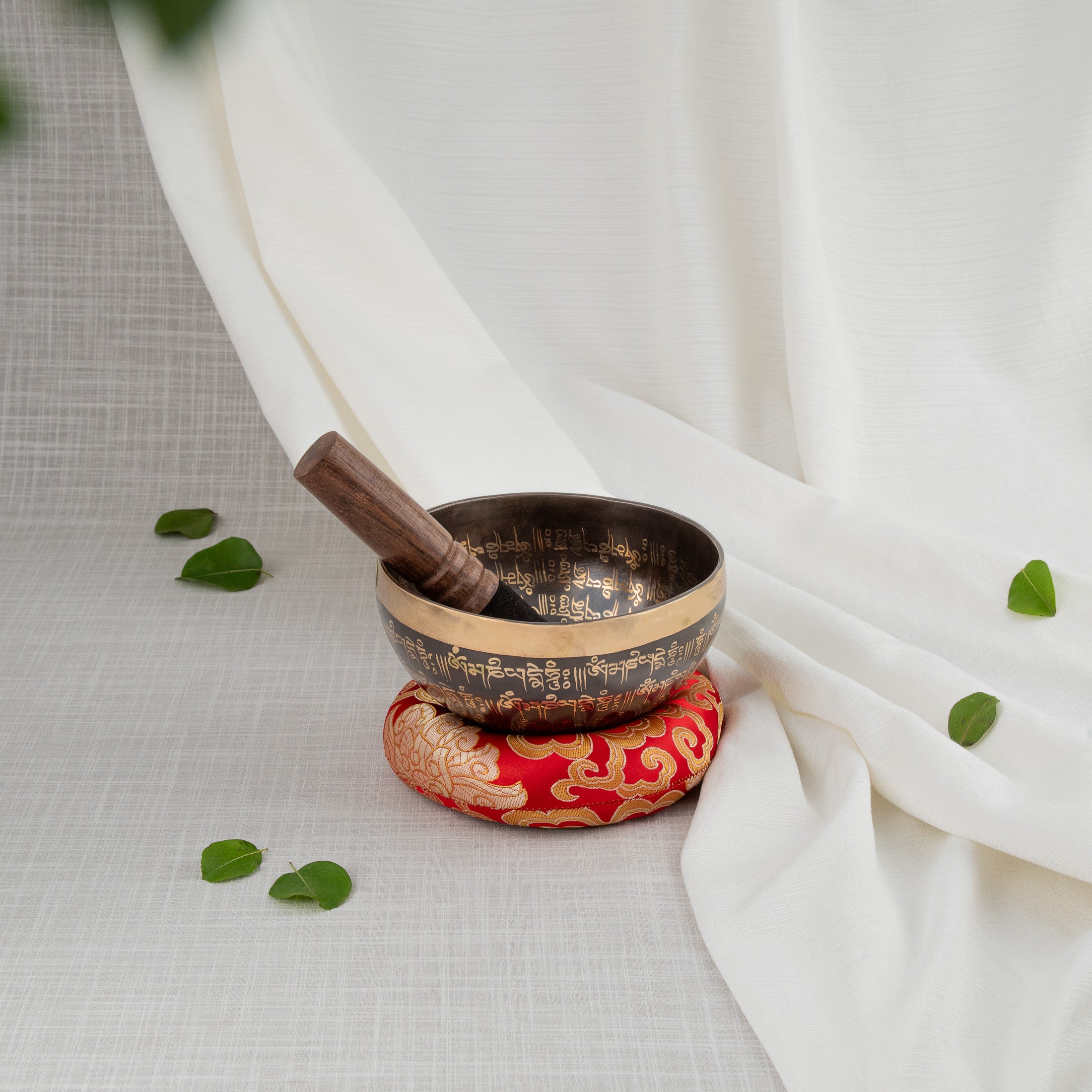
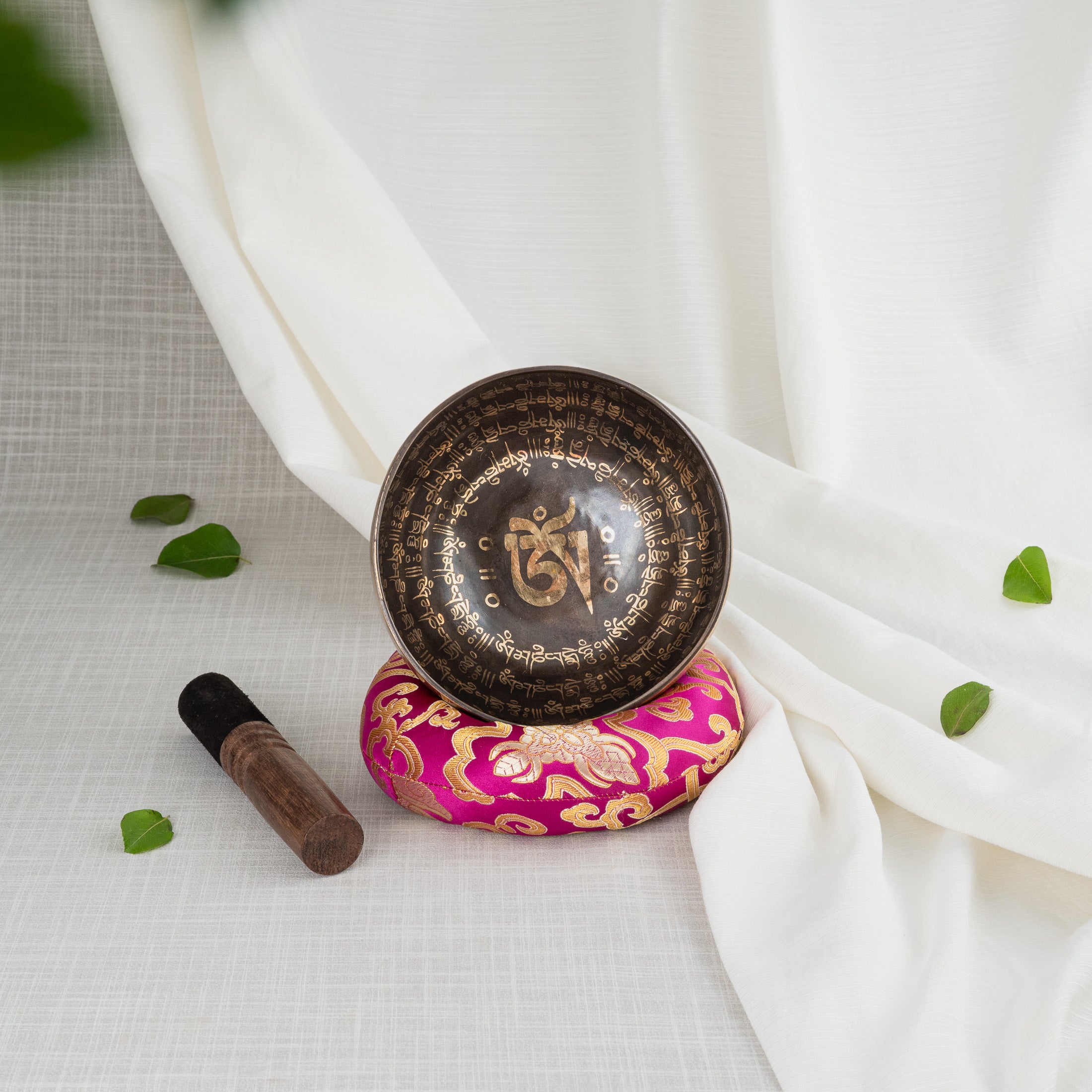
Singing bowls are traditional sound instruments associated with the Himalayan region, including Nepal and Tibet. When struck or rubbed around the rim, they produce a sustained tone with layered harmonics and vibration. They are also commonly referred to as Himalayan or Tibetan singing bowls. To understand more about them, please read our article on understanding singing bowls.
Tone and Resonance
The sound of a singing bowl is created through vibration. When the bowl is gently struck or rubbed along the rim with a mallet, the bowl begins to vibrate and produces a sustained tone accompanied by natural overtones. Each bowl develops its own sound character depending on factors such as size, thickness, shape, and craftsmanship. Because authentic Himalayan singing bowls are handcrafted, "no two bowls produce exactly the same tone or resonance".
Traditional Hand-craftsmanship
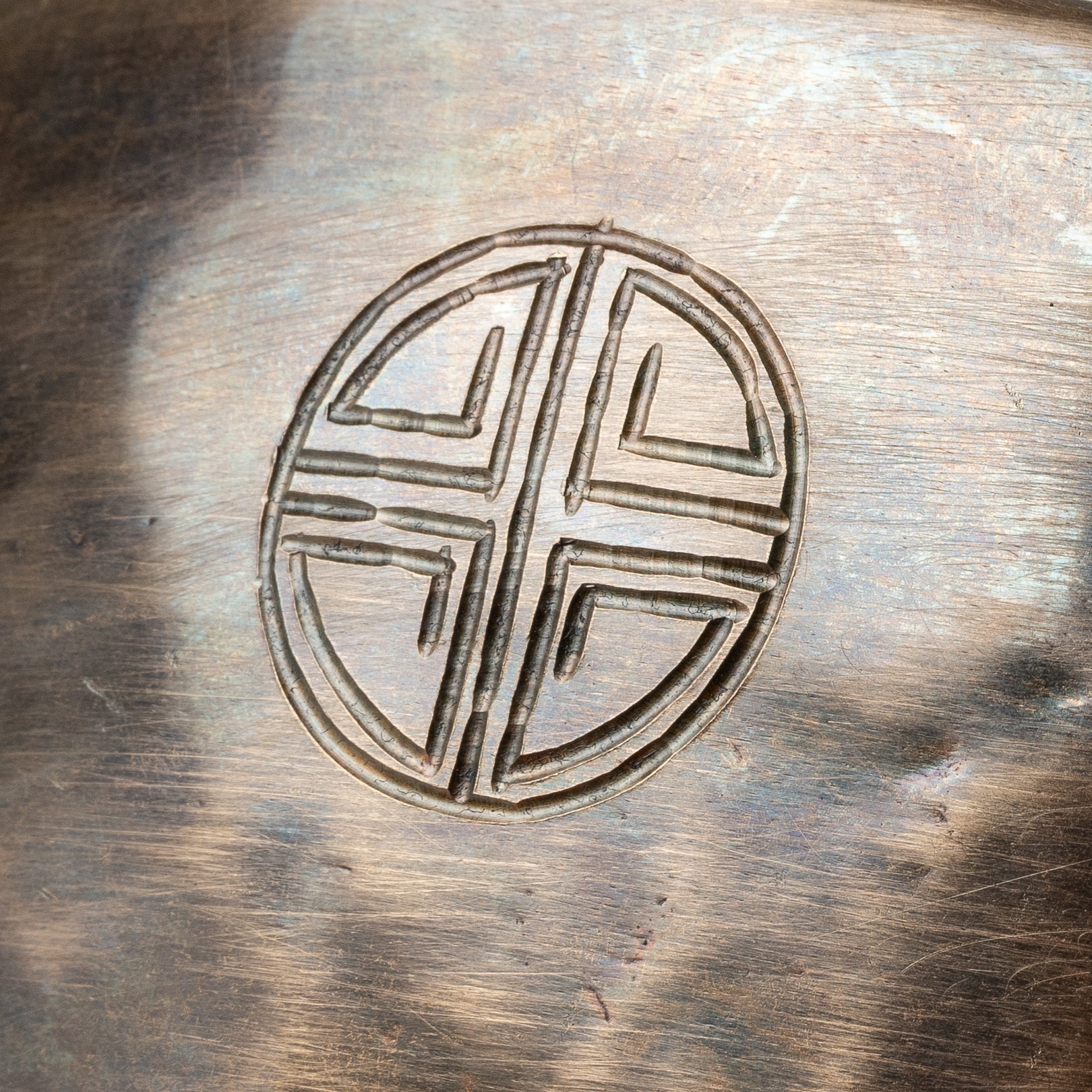
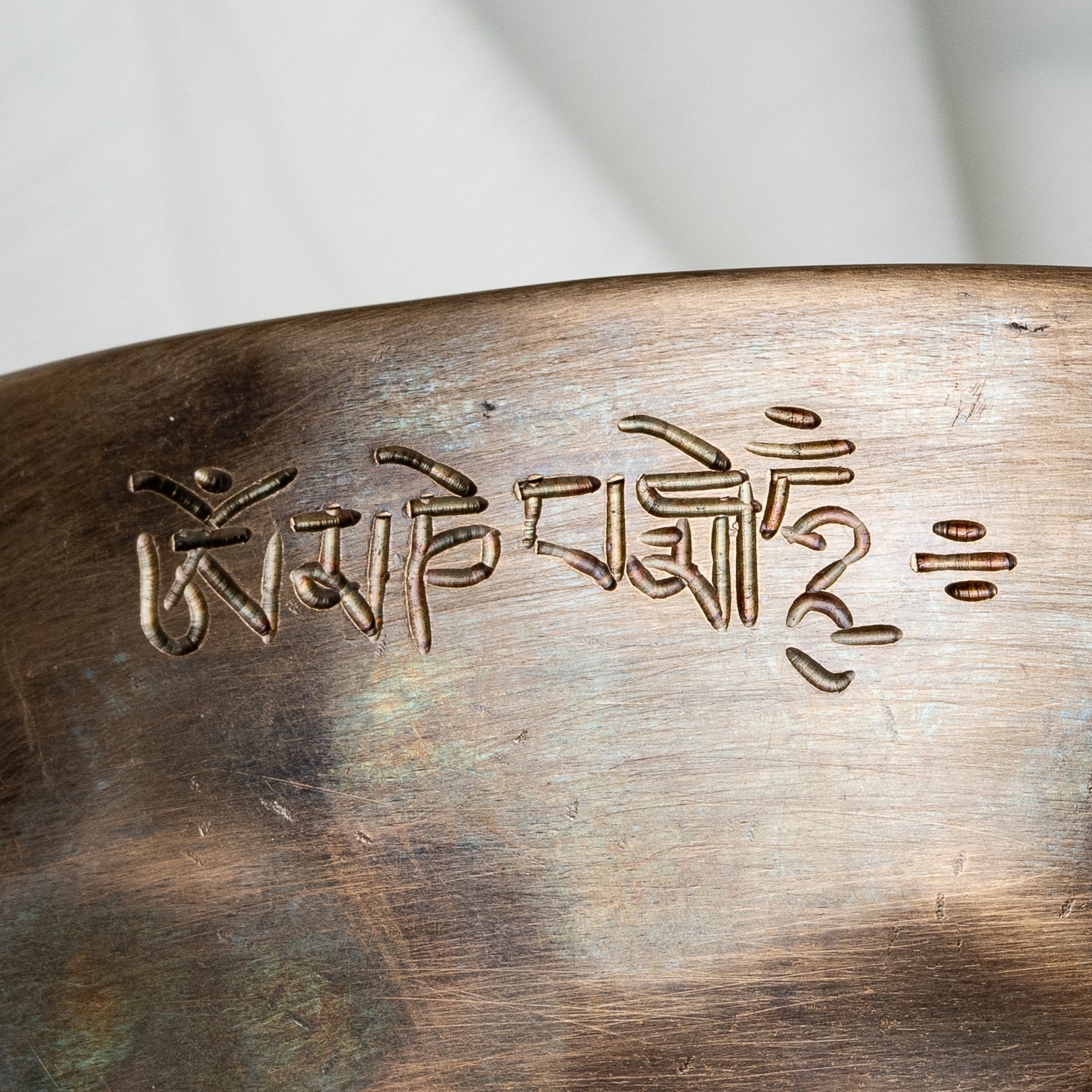
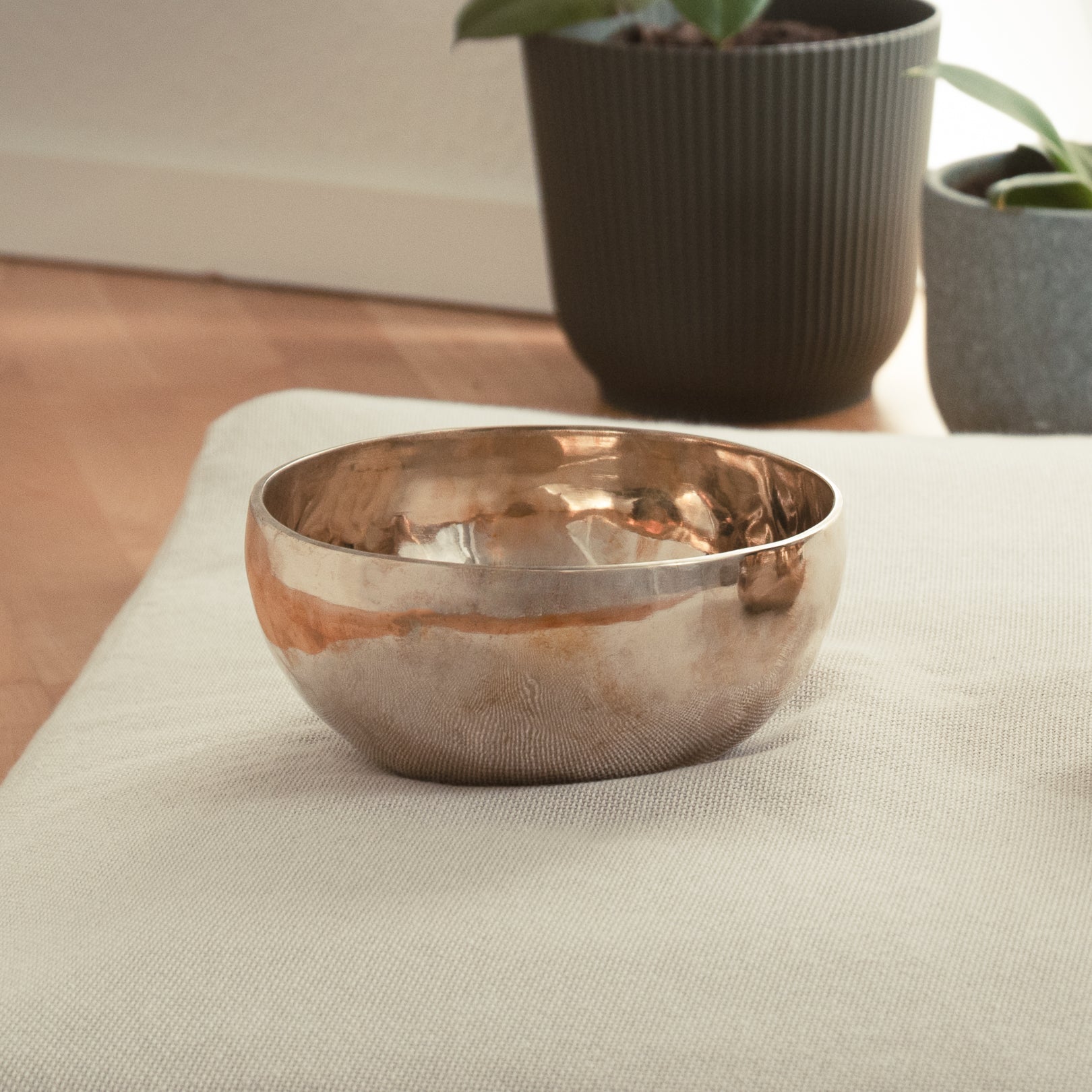
Our singing bowls are hand-hammered using traditional techniques passed down through generations of Newari artisans in Nepal. Each bowl begins as a flat piece of metal alloys. Through repeated hand-hammering, skilled artisans gradually shape and refine the metal until the bowl reaches its final form and tonal balance. The bowl is then hand-polished, and depending on the design, it may also be etched or hand-carved to add symbolic patterns and details, allowing both its sound and surface to fully emerge. Because each bowl is crafted by hand, subtle hammer marks, slight asymmetry, and natural variations are part of the process. These characteristics reflect traditional craftsmanship, and no two bowls are exactly the same.

Usage & Benefits
Singing bowls have long been used in spiritual and meditation practices across Himalayan cultures. Traditionally, their sound supported moments of reflection, ritual, and focused awareness.
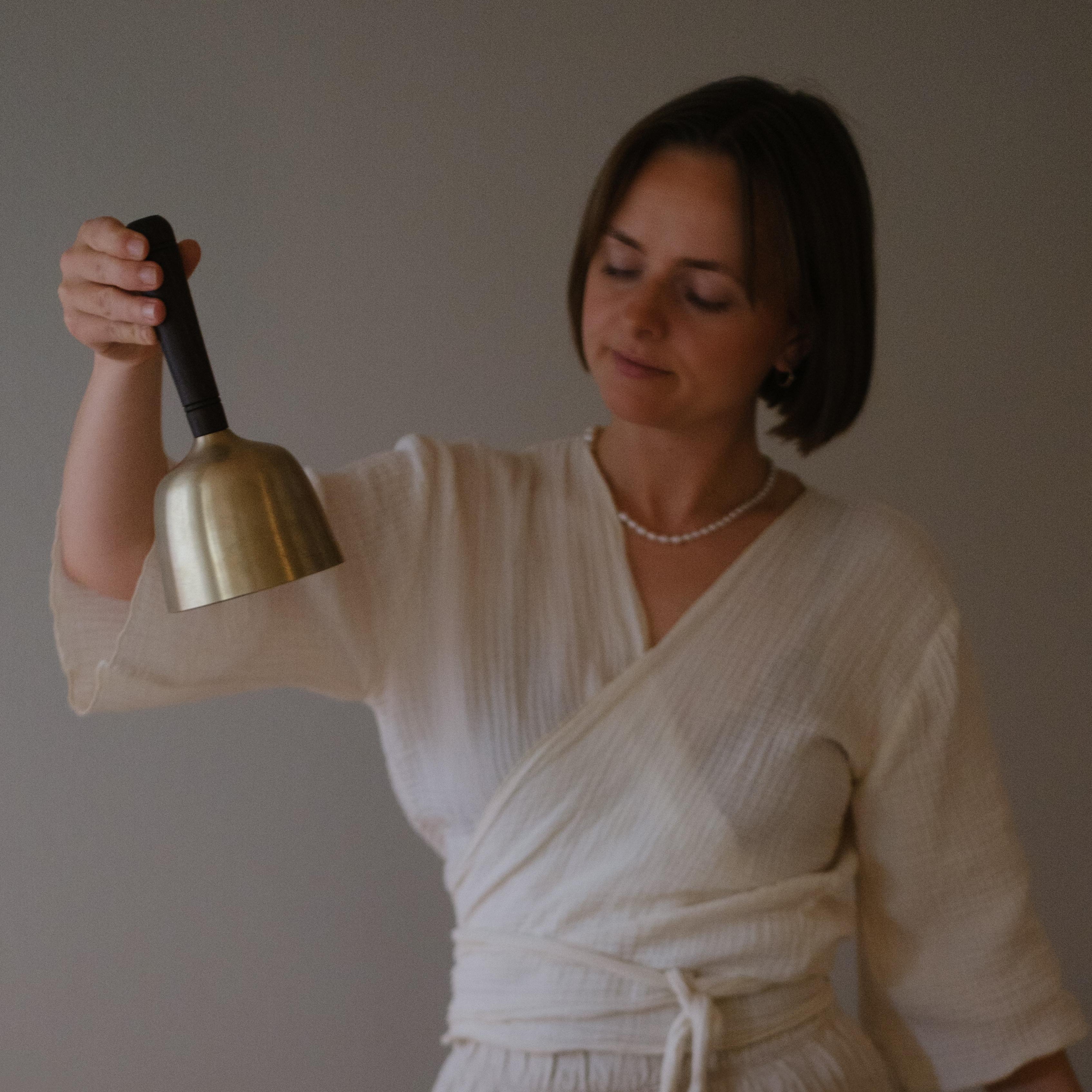
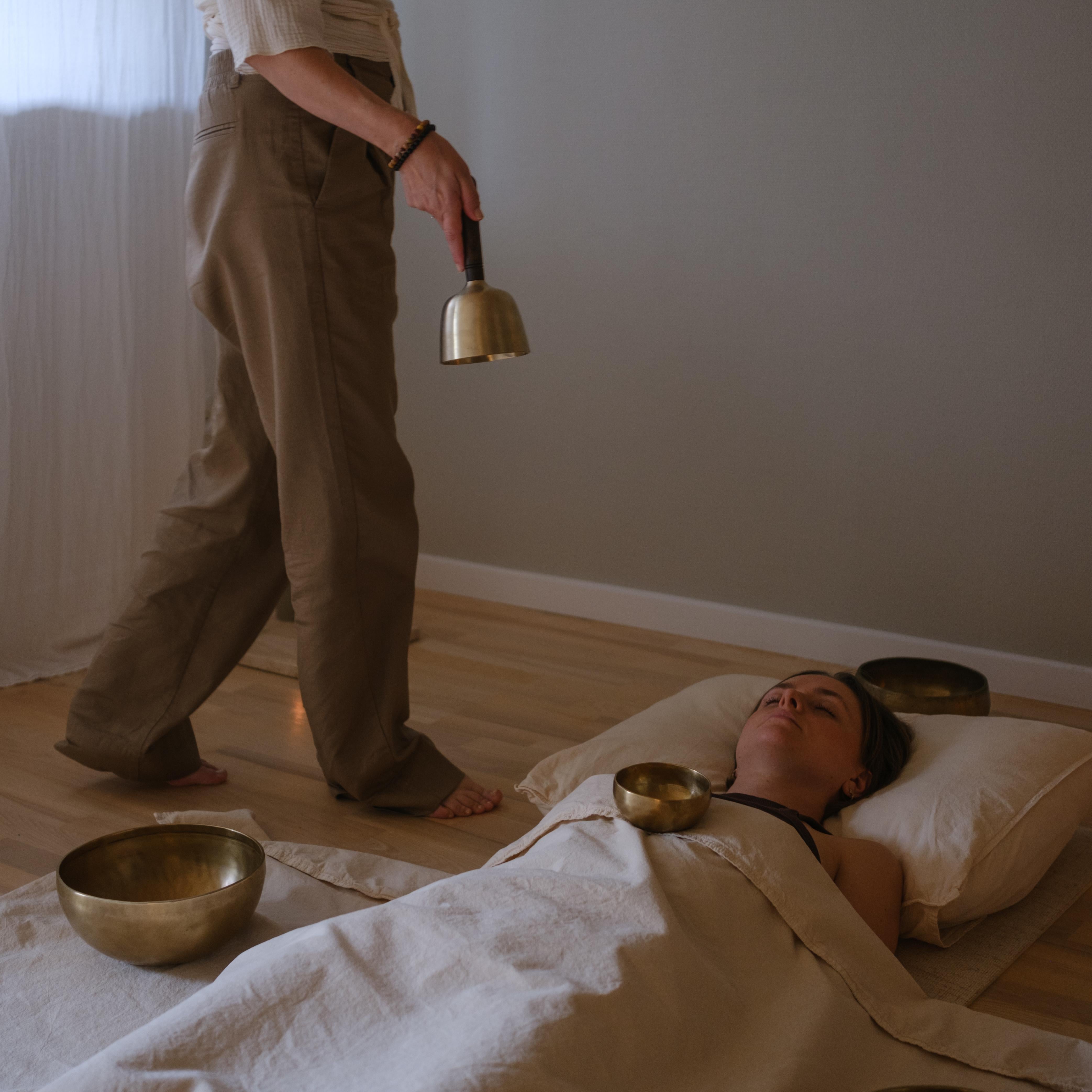
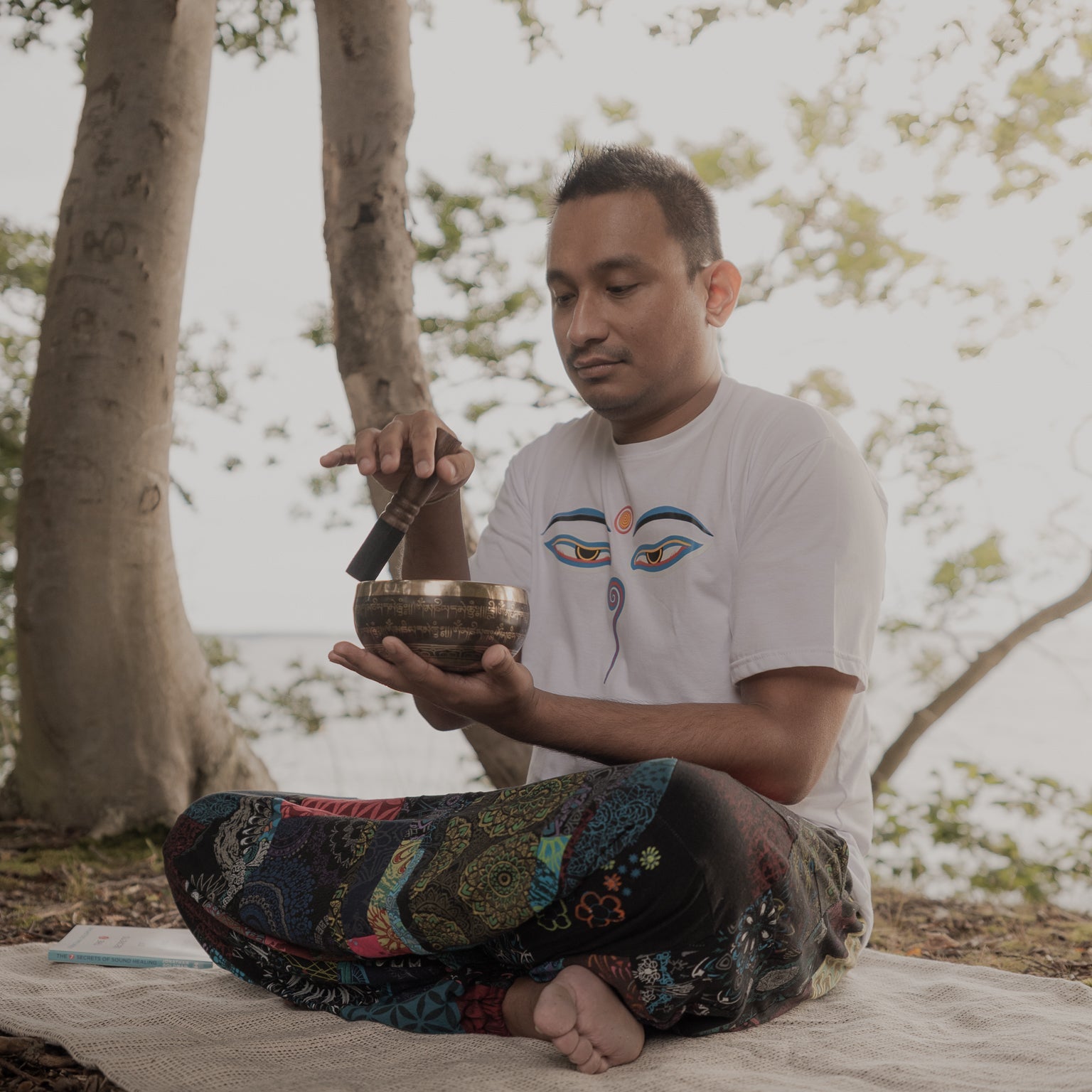
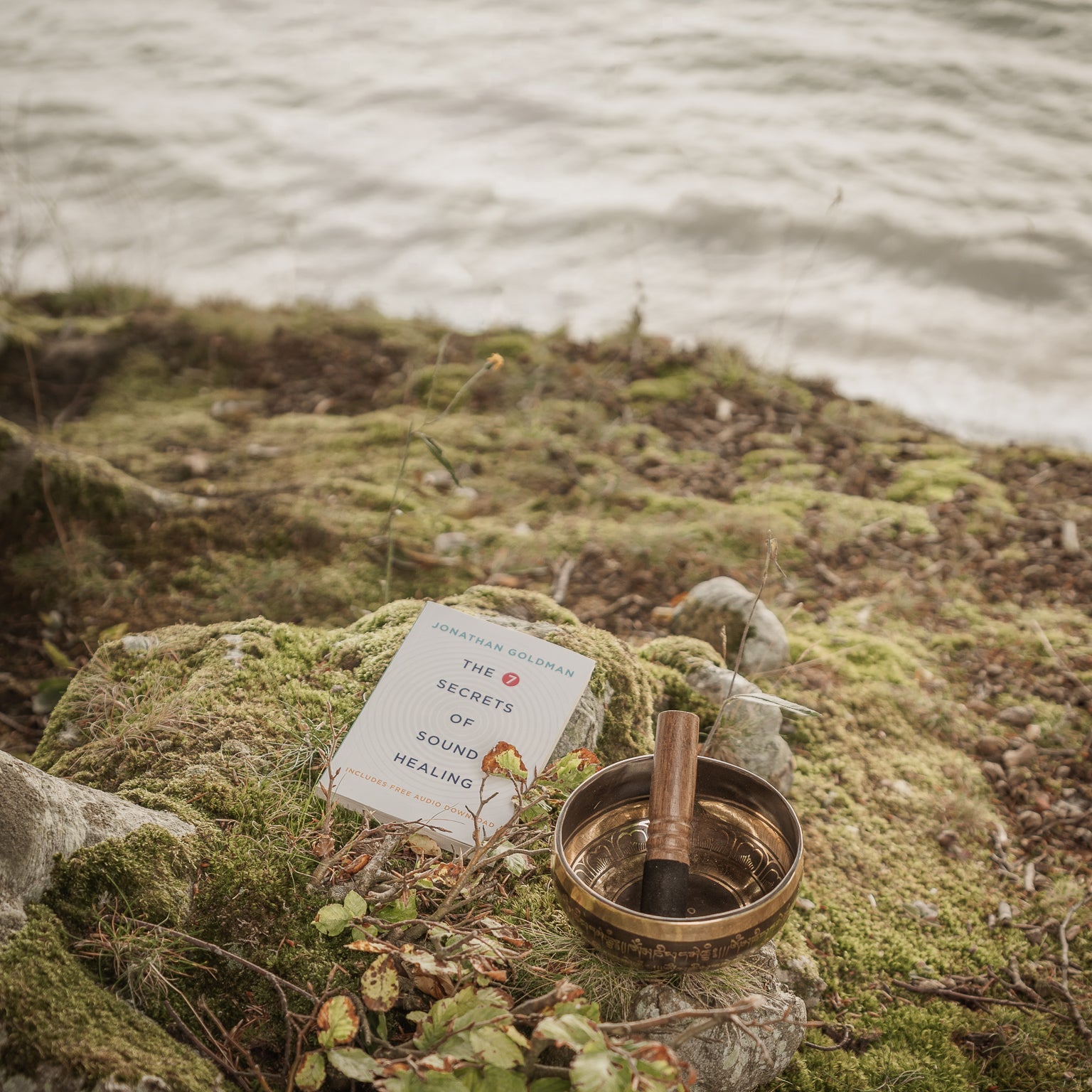
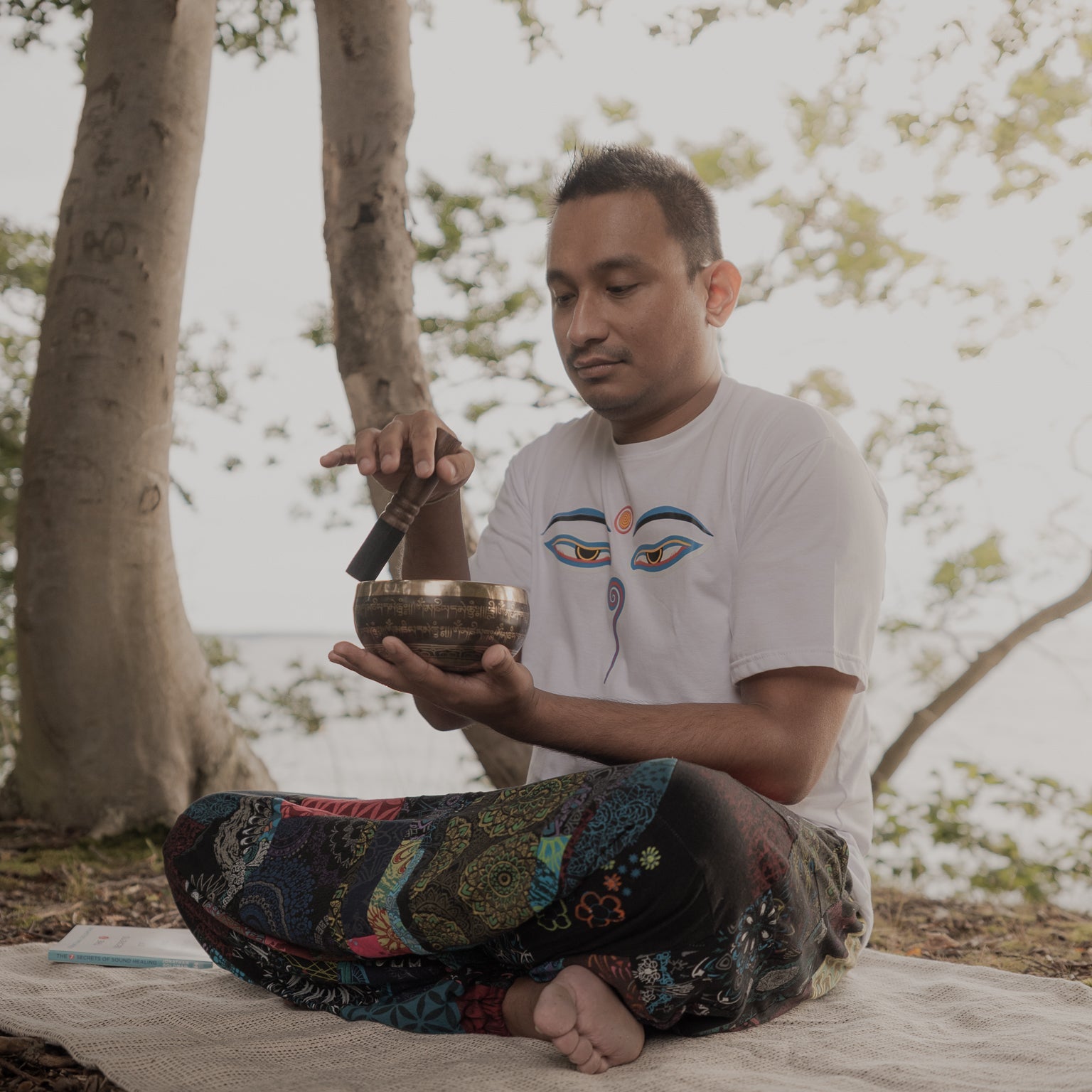
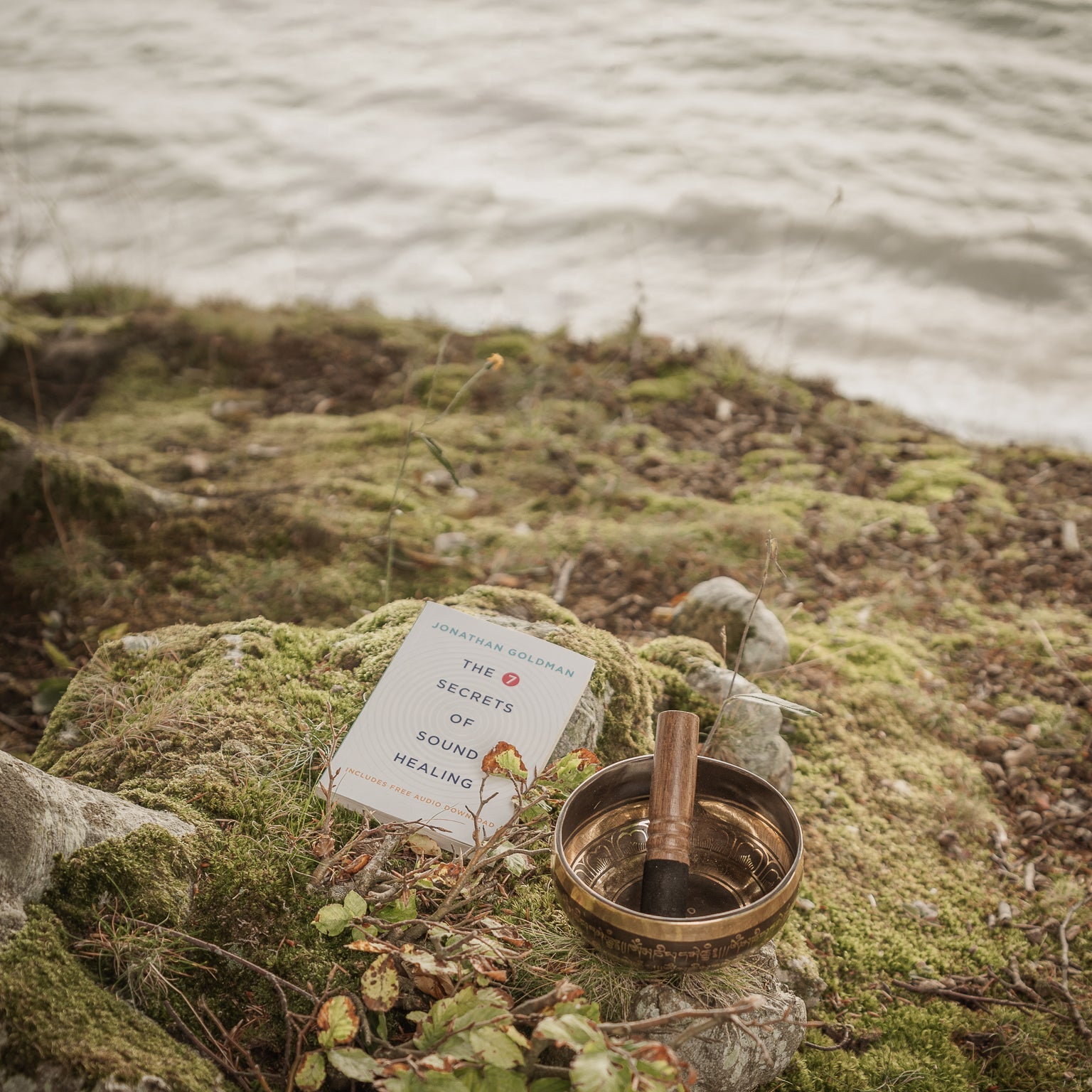
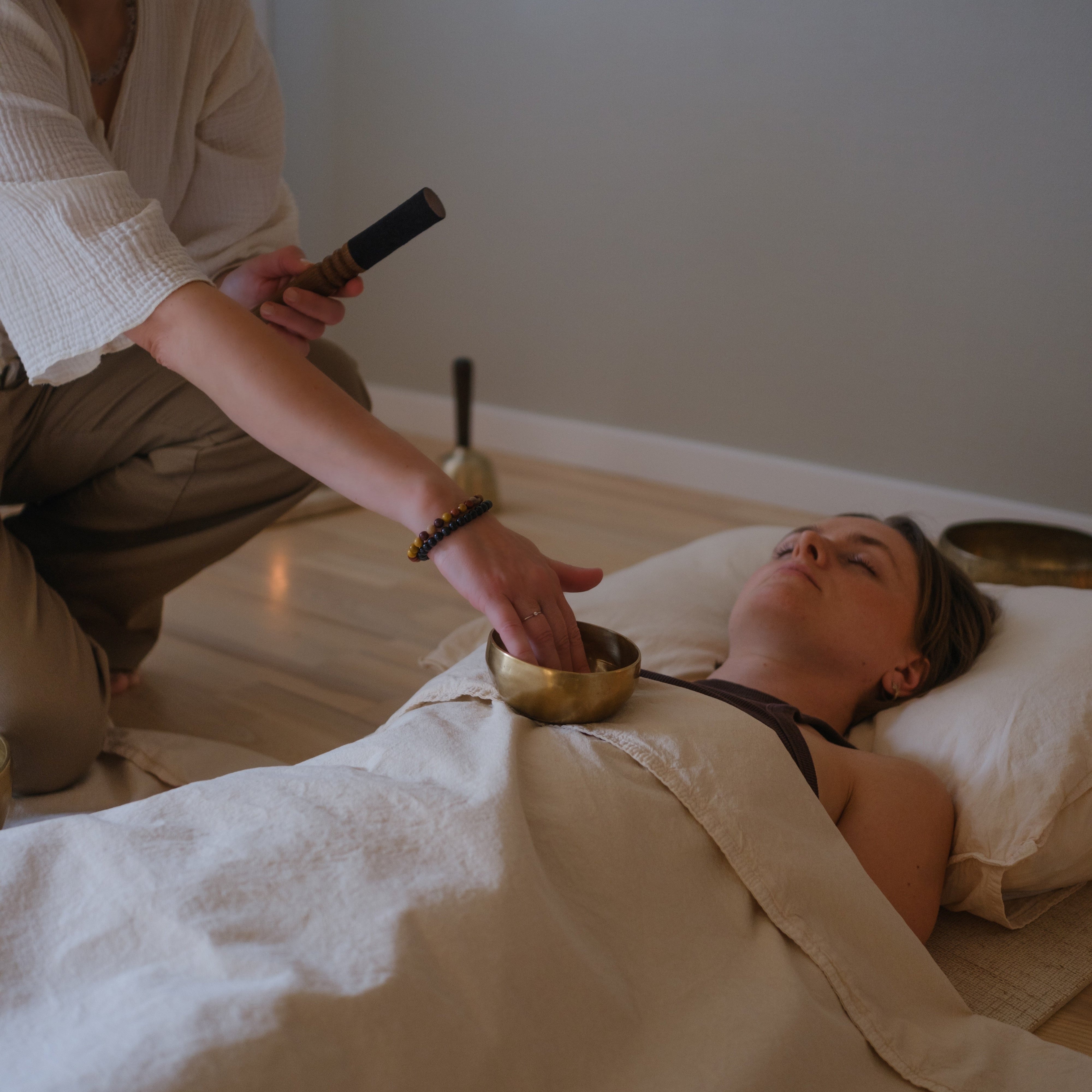
Today, singing bowls are widely used in meditation, yoga, mindfulness practices, sound healing sessions and other forms of wellness related practices like Reiki Healing. Their sustained tones and vibration can help create a calm atmosphere, support focused attention, and encourage relaxation.
Emerging scientific research has begun exploring the therapeutic effects of singing bowls. A recent systematic review of clinical studies reports that singing bowl sound meditation supports relaxation, reduce stress, anxiety, and depression, and improve sleep quality and overall well-being. These findings help explain why singing bowls are increasingly used in meditation, mindfulness, and modern wellness practices around the world.
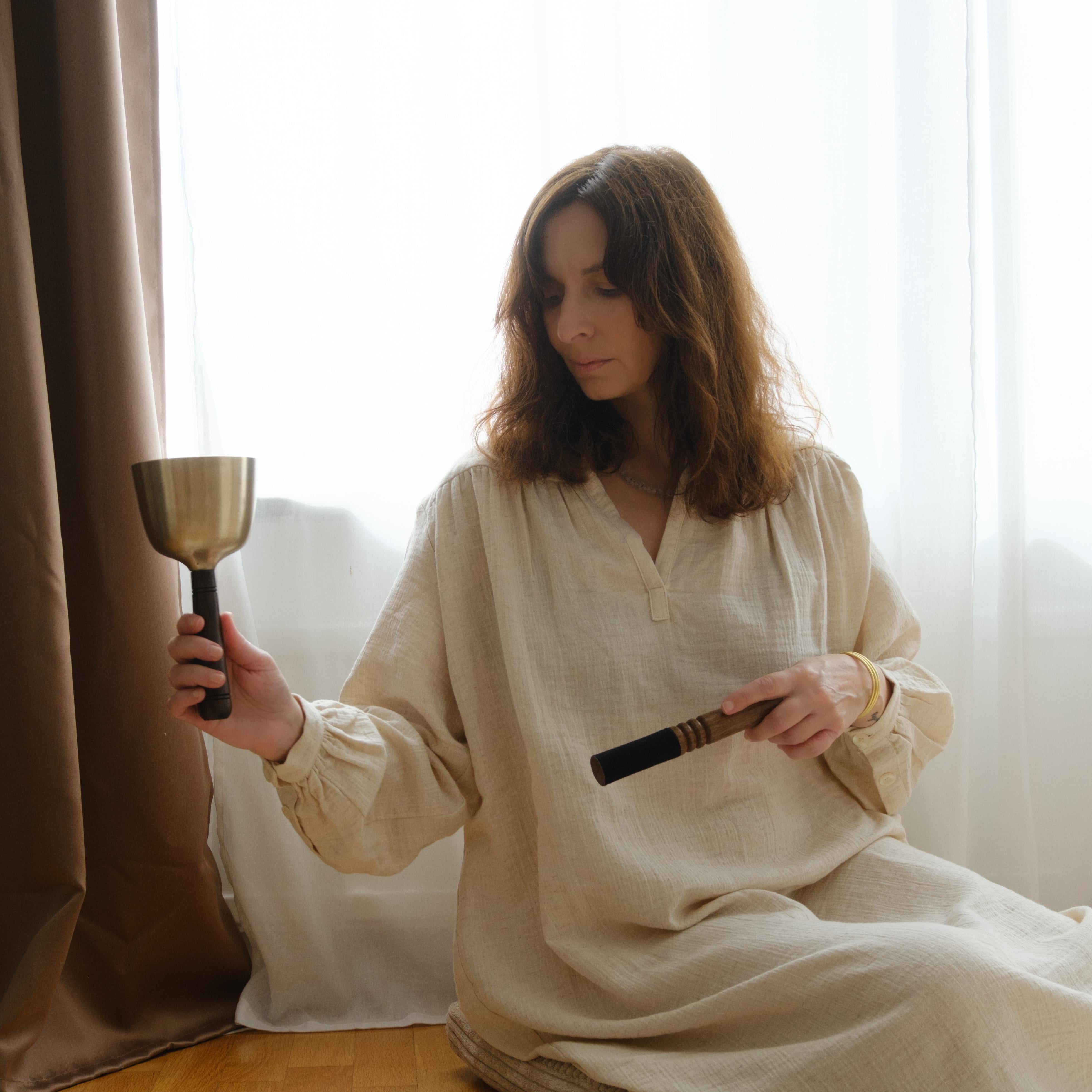
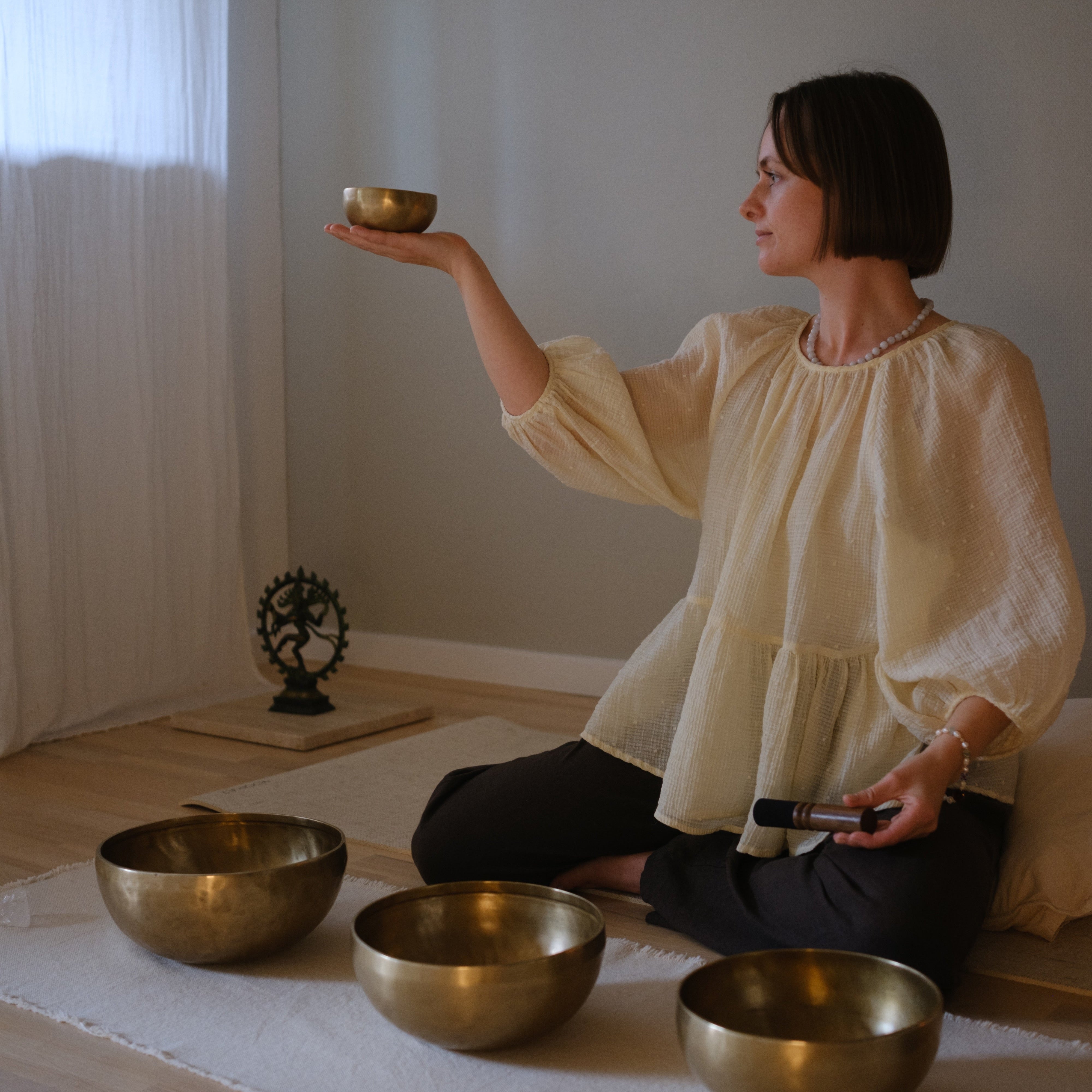
A practitioner shares her experience using our Himalayan singing bowls in the video available on YouTube.
Frequently Asked Questions
How do I choose the right singing bowl?
Choosing a singing bowl often begins with your intention and the size of the bowl, which influences its tone and resonance. Trust your intuition and listen to the sample sound recordings we provide to find the bowl that resonates with you. Learn more in our guide How to Choose the Right Singing Bowl.
What makes one singing bowl different from another?
Generally, there isn’t one “better” singing bowl. It’s about finding the bowl that suits your intention and resonates with you. The depth and tone of the sound depend mainly on the size, shape, and craftsmanship of the bowl.
Other factors can also influence your choice, such as budget, aesthetic preference, or the symbolic meaning behind certain designs of etched singing bowls or how some people associate specific tones with the chakra system. You can also explore the individual product descriptions to learn more about the characteristics of each bowl.
Ultimately, listen and trust your intuition and you will often find the singing bowl that resonates most with you.
How do you play a singing bowl?
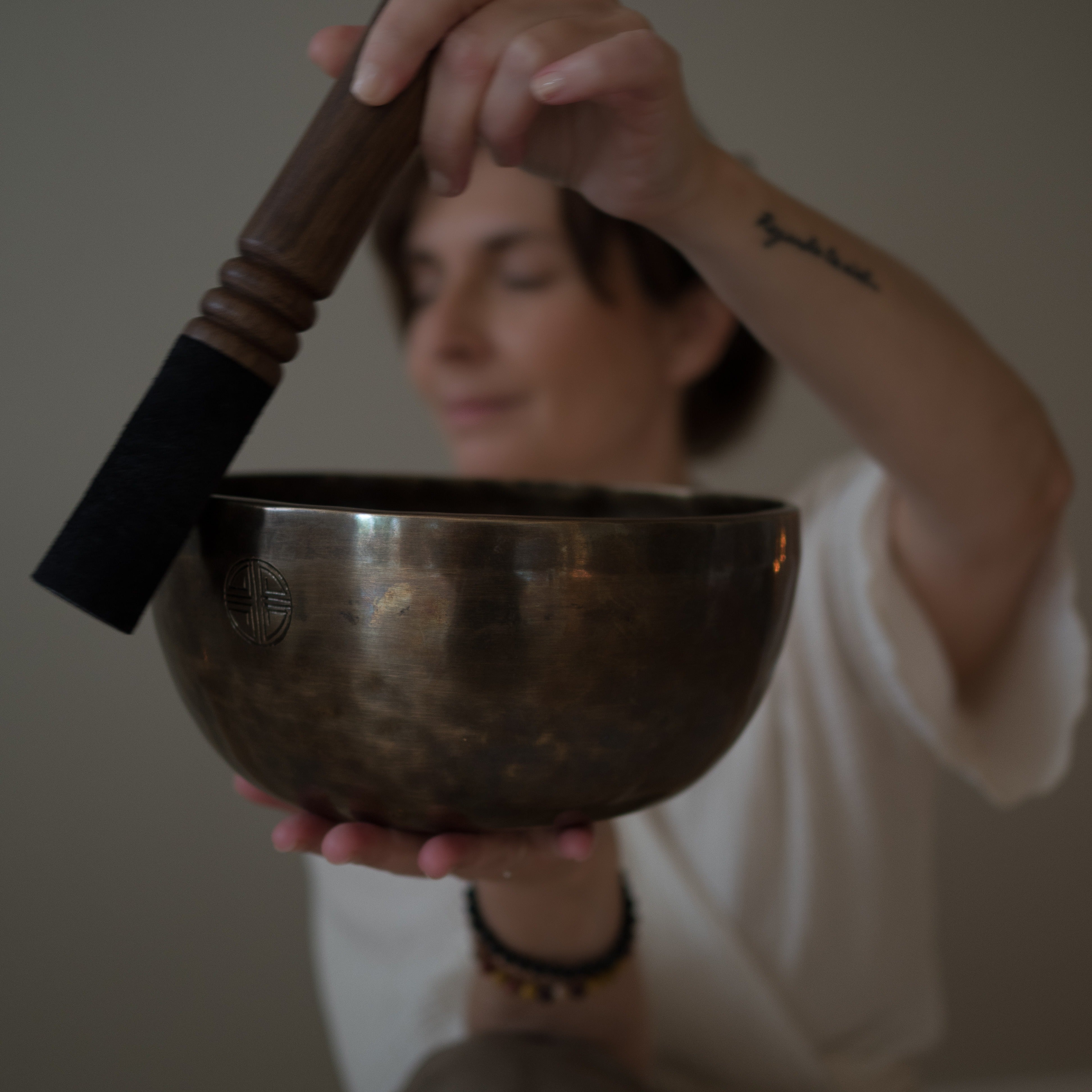
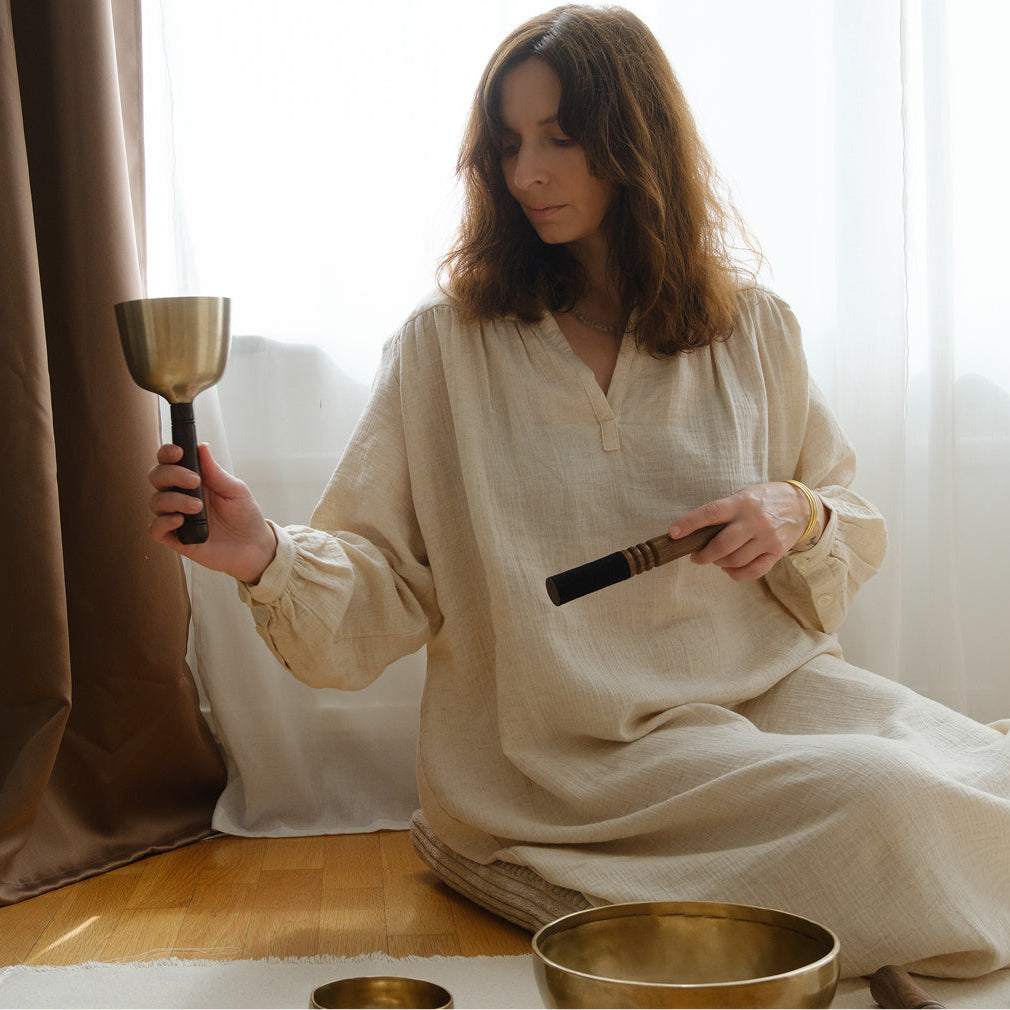
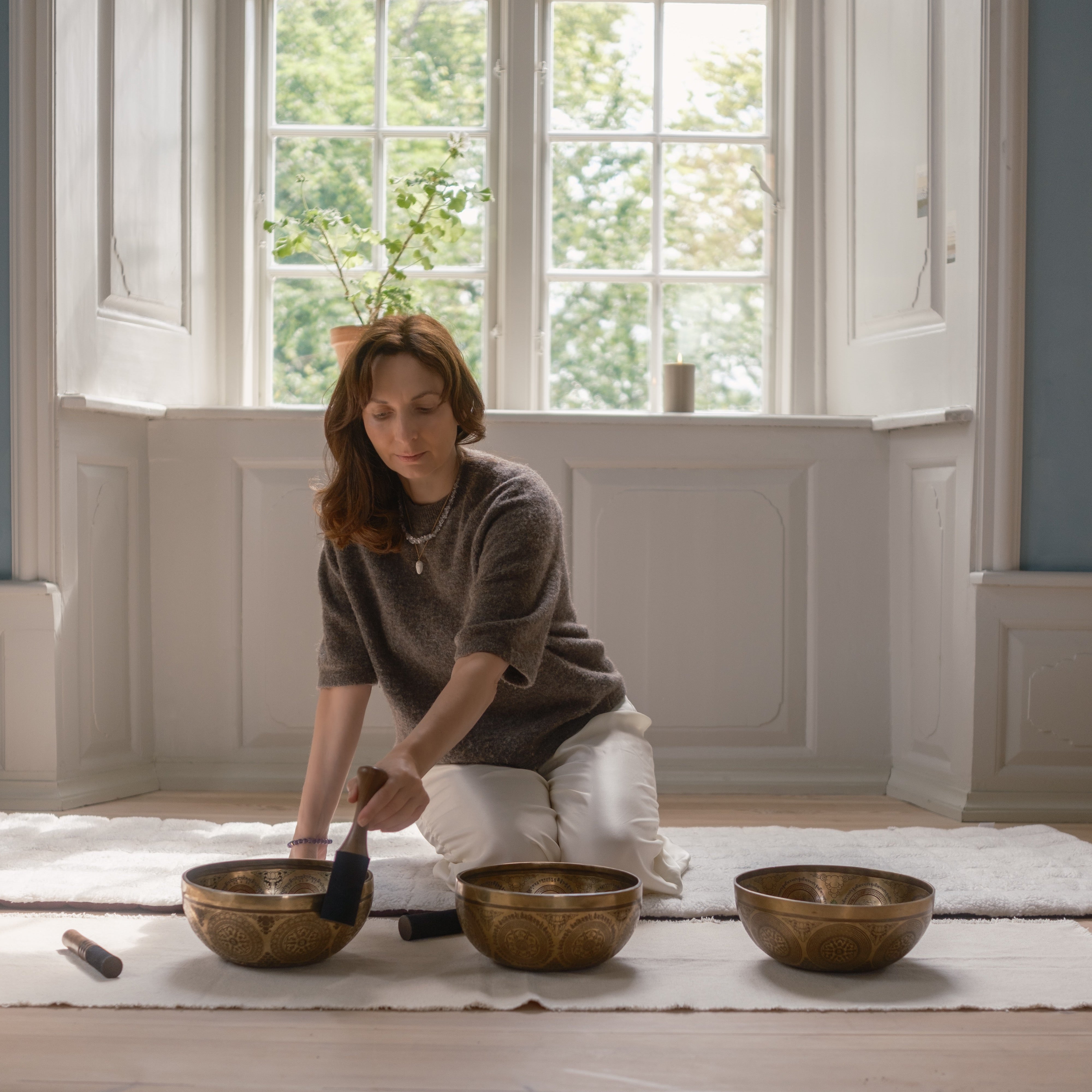
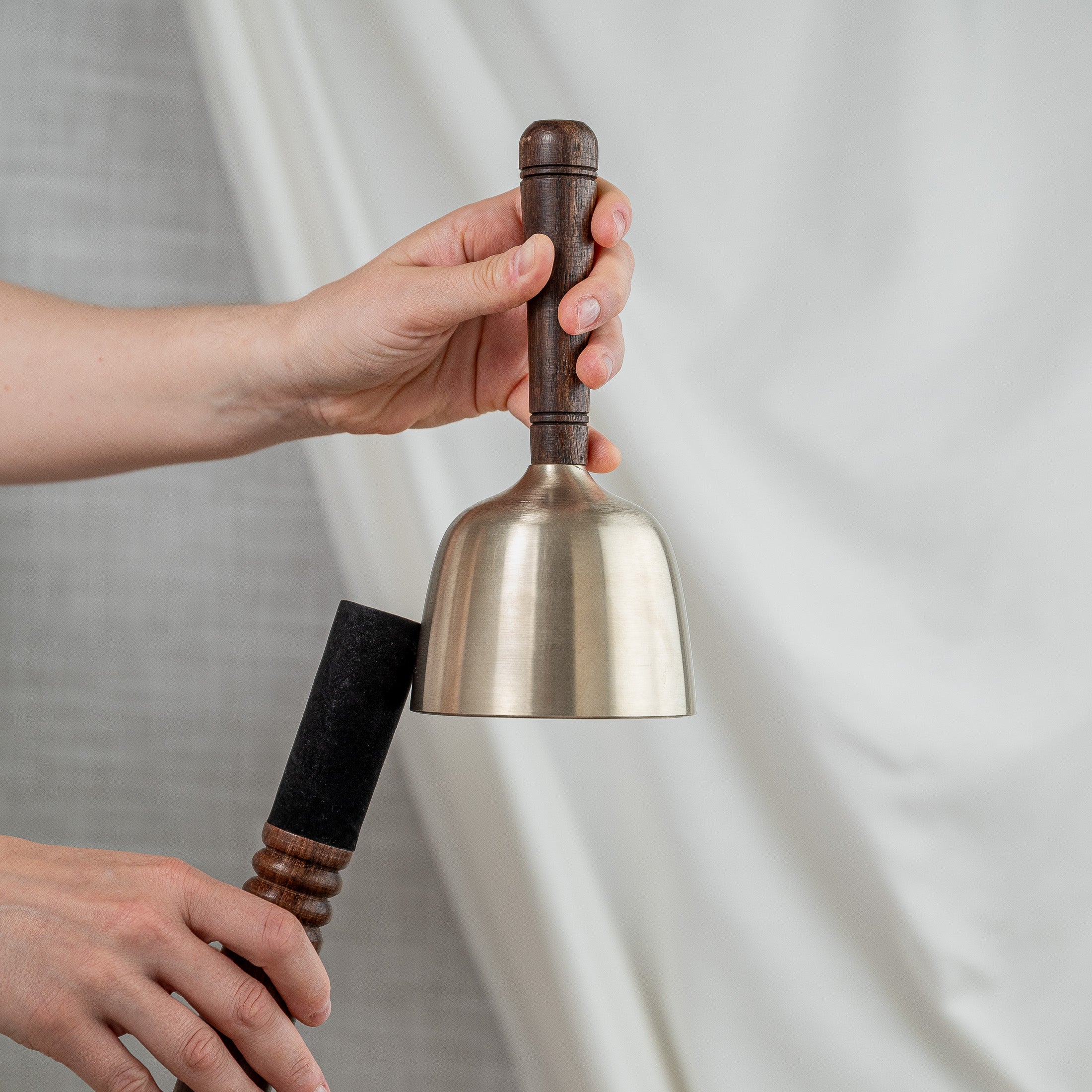
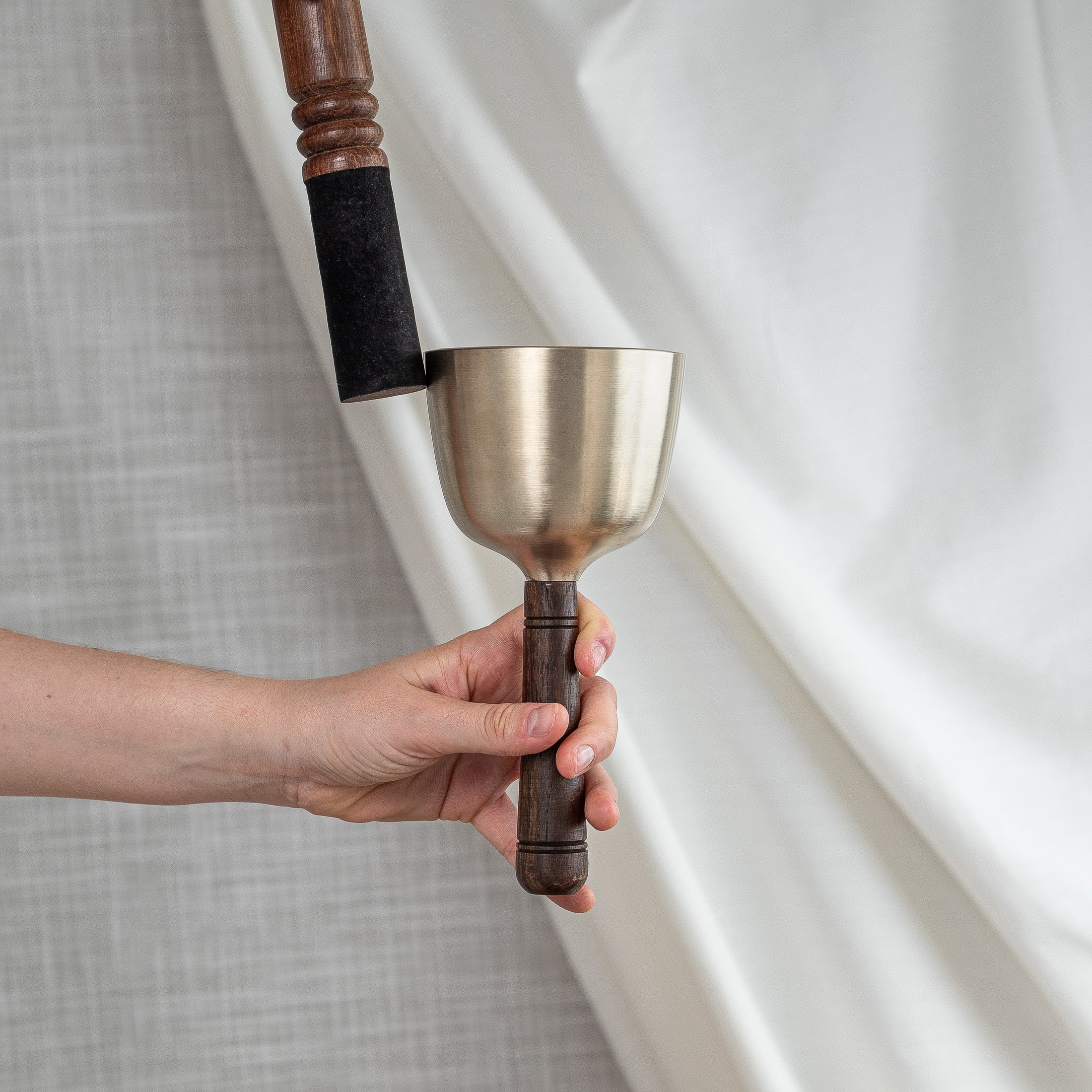
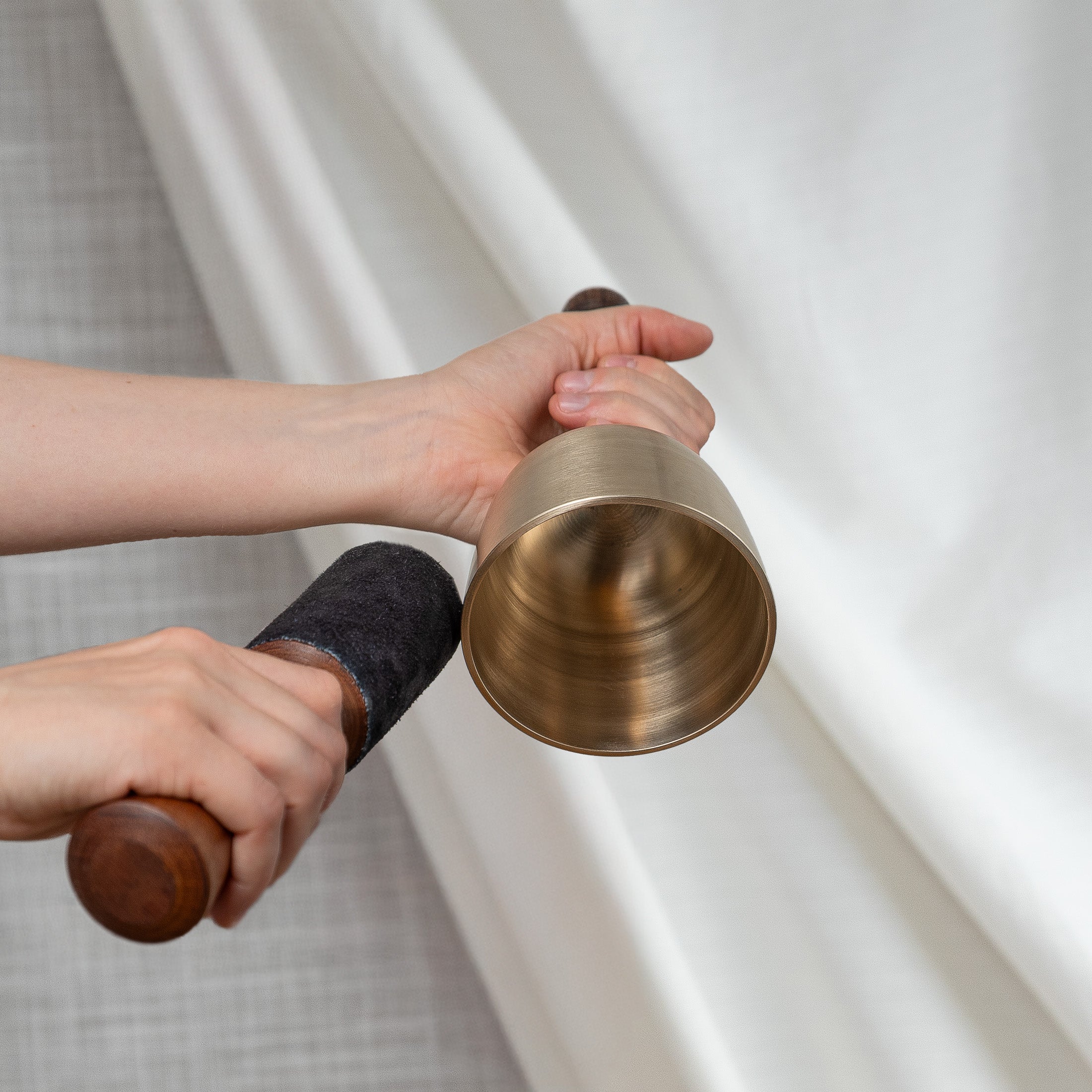
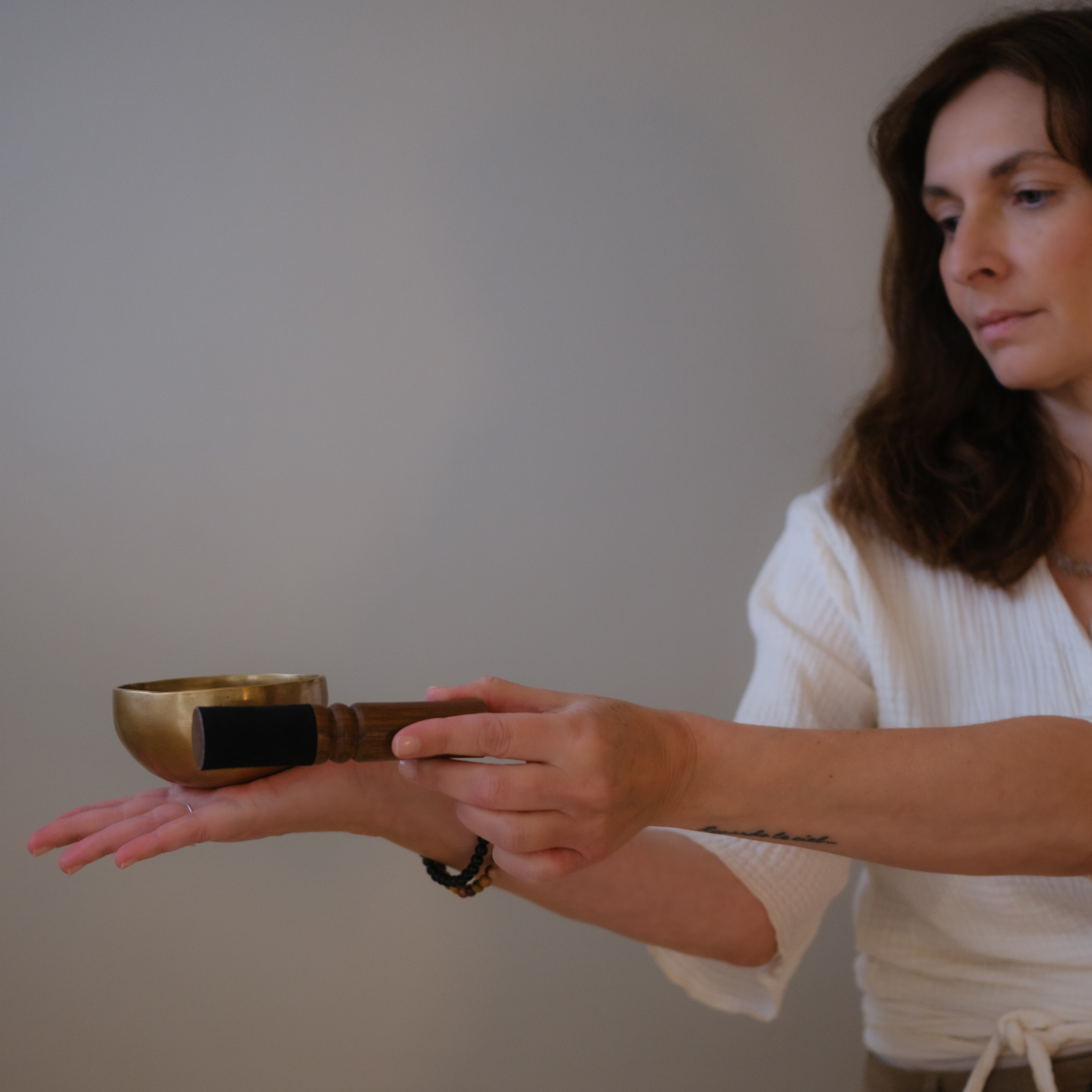
A singing bowl can be played by gently striking the bowl with a mallet or by slowly rubbing the rim to create a continuous singing tone. For best resonance, the bowl should rest freely on your open palm or on a cushion so it can vibrate naturally.
For a step-by-step guide, see How to Play a Singing Bowl - A Simple Guide.
What is the difference between small, medium and large singing bowls in our assortment?
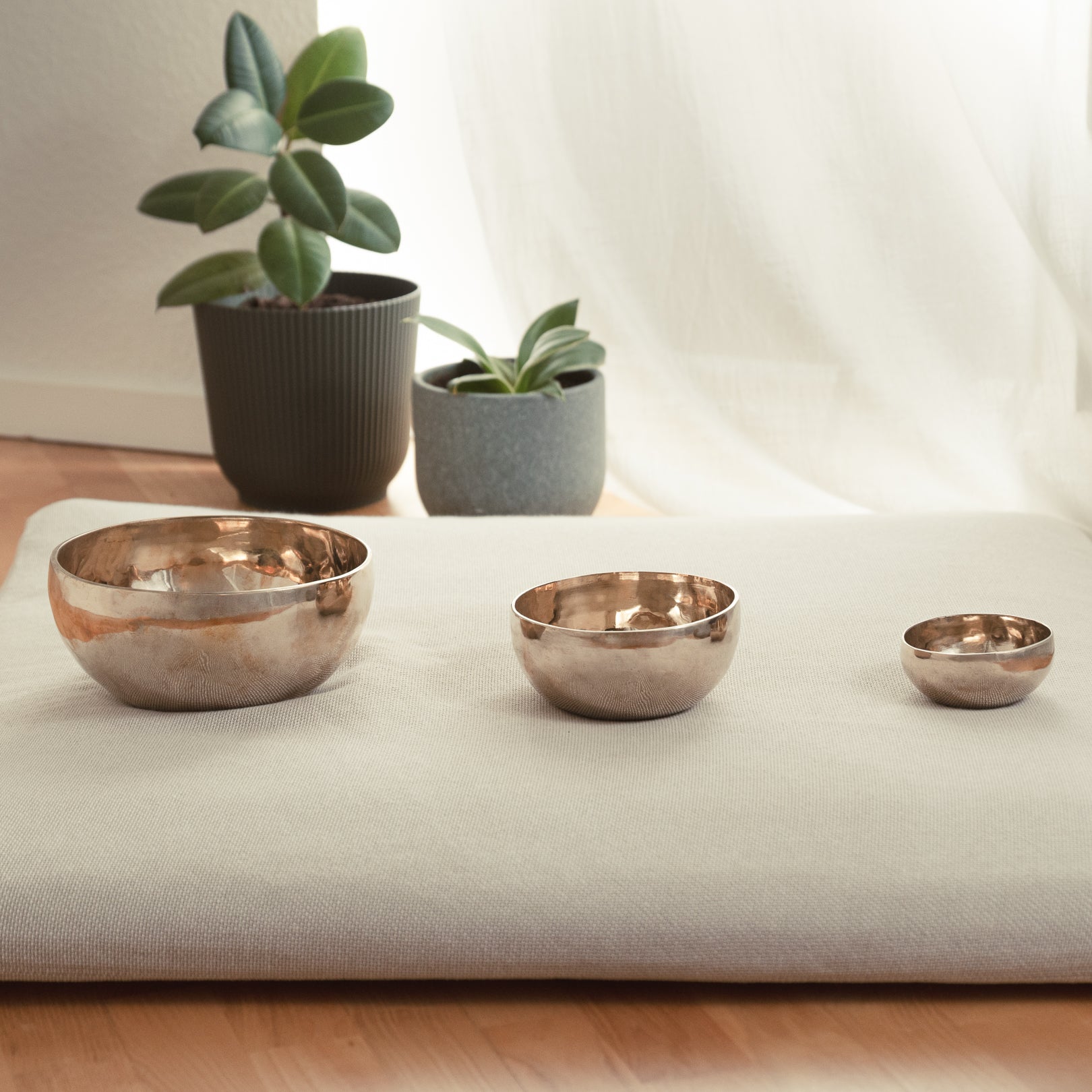
Singing bowls come in different sizes, and the size of the singing bowl influences its tone and vibration. Small singing bowls (1–15 cm) usually produce higher, clearer tones. Medium bowls (16–25 cm) create balanced mid-range sounds with rich overtones, while large singing bowls (26 cm and above) produce deeper, more grounding vibrations that can often be both heard and felt.
There is no universal standard for classifying small, medium, and large singing bowls. Because each bowl is handcrafted, natural variations in size, weight, rim thickness, and tonal quality occur from piece to piece, and no two handcrafted singing bowls are exactly alike.
To make selection easier, we use a practical size classification within our collection, where both diameter and weight of the singing bowl help guide the category. These classifications serve as helpful guidance for comparison rather than fixed standards, while still respecting the individuality of each handcrafted bowl.
What is the difference between various singing bowl mallets in our assortment?
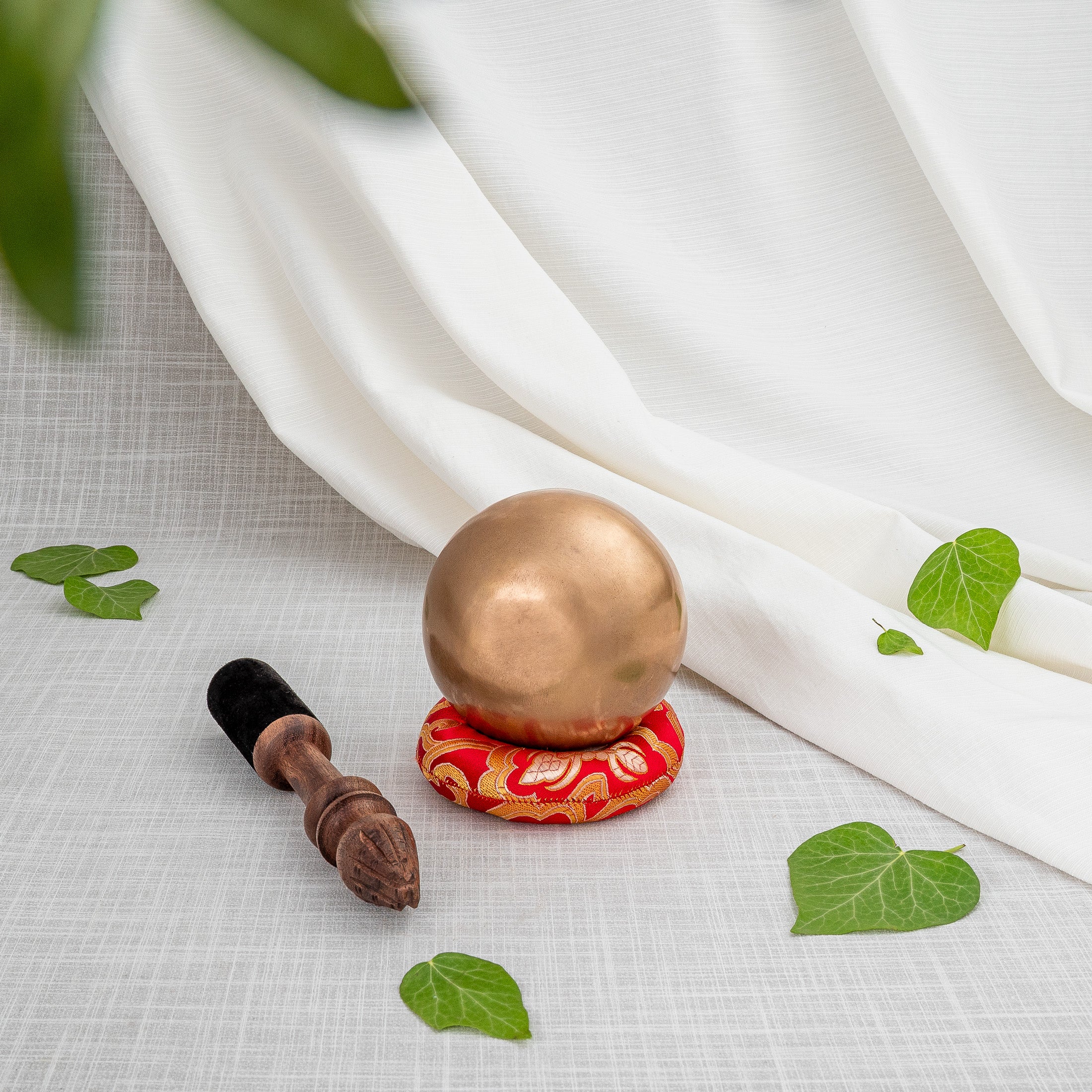
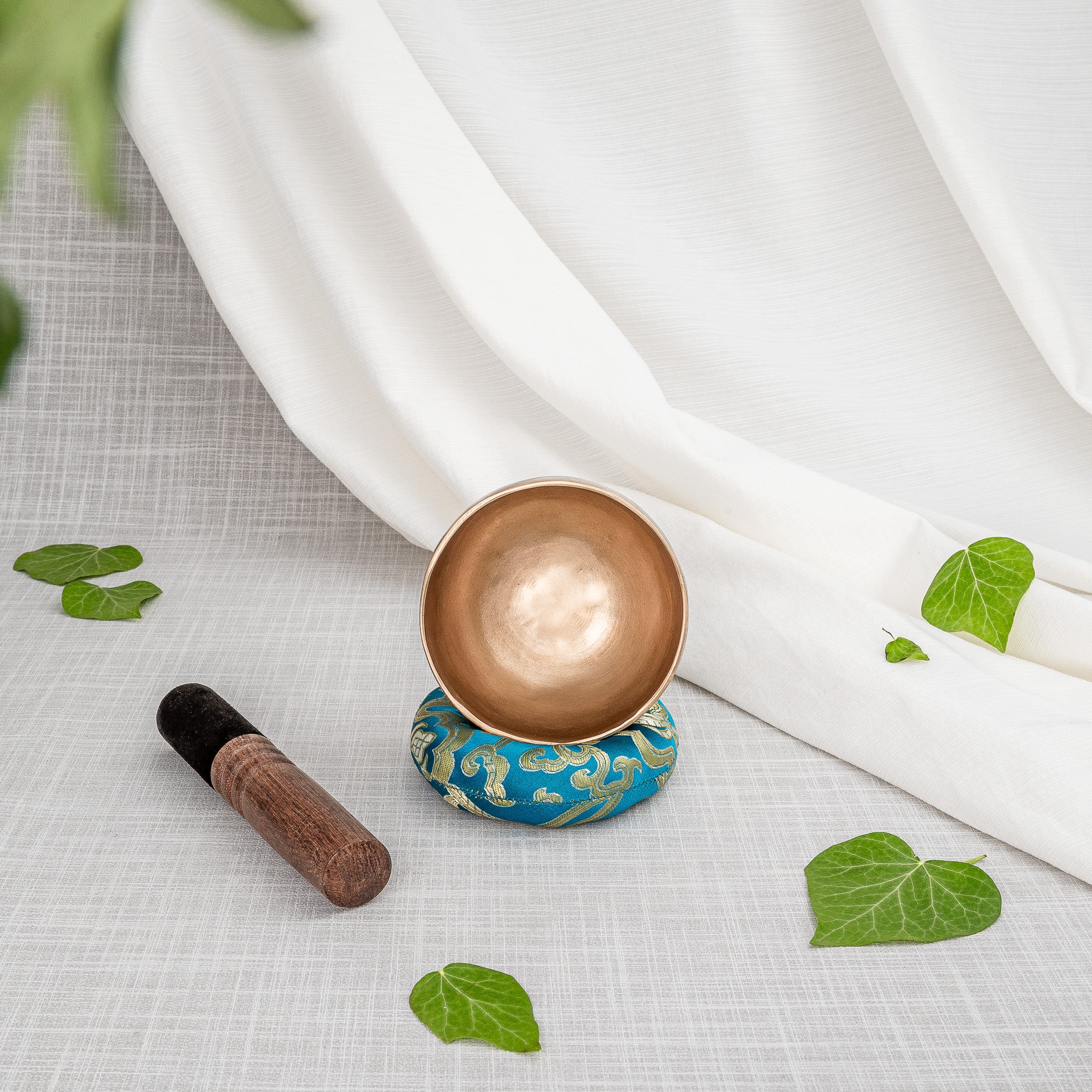
Different mallets produce different tones when playing a singing bowl. The standard mallet included with the bowl has a wooden end and a suede-wrapped end, each creating a slightly different sound. The Lingam mallet has a larger suede head that produces deeper, fuller tones and offers better grip. The Red Wool Felt mallet creates a softer, clearer, and more calming tone when striking the bowl.
For a more detailed explanation, please read our blog article Singing Bowl Mallets Explained.
Are handmade singing bowls supposed to have marks or slight asymmetry?
Yes. Handmade singing bowls are hand-hammered, so small hammer marks, scratches, slight variations, or minor asymmetry are normal. These are natural signs of traditional craftsmanship. Because each bowl is shaped by hand, no two singing bowls are exactly the same.
Do handcrafted Himalayan singing bowl prices change often?
Yes. Prices can change because the cost of bronze and brass alloys such as copper, tin, and zinc often fluctuates. When material, labour or logistics costs change, the price of newly crafted singing bowls may also adjust.
We aim to keep our prices fair, but occasional updates are necessary to reflect changes in procuring costs and new stock.
For antique singing bowls, pricing can also vary depending on factors such as rarity, age, condition, and sound quality.
Will my singing bowl look exactly like the photos?
For most of our handcrafted Himalayan singing bowls, you will receive a bowl that is very similar to the one pictured.
Because these singing bowls are hand-hammered by artisans, small variations are natural. You may notice subtle differences in hammer marks, surface texture, rim thickness, or slight asymmetry in the shape. These characteristics are part of the authentic handmade process and give each bowl its own unique character.
For singing bowl sets, you will receive the exact same set shown in the photos.
How do I care for a singing bowl?
Clean the bowl occasionally with a soft cloth dipped in lukewarm water and avoid using harsh chemicals. Store it in a dry place and handle it with care to avoid dropping it on hard surfaces. With proper care, a handmade singing bowl can last for many years.
Who may need to be cautious when using singing bowls?
Singing bowls are generally used for relaxation, meditation, and sound practices. However, people who are pregnant or those with certain neurological conditions, heart conditions, or sound sensitivities may wish to approach sound practices with extreme caution.
Children can use singing bowls, but should always do so under the supervision of a parent or guardian.
If you have any health concerns, it is always best to consult a qualified healthcare professional before participating in sound-based practices.


