









📌 In this article, we focus only on handcrafted Himalayan (Tibetan) singing bowls.
Many new beginners think playing a singing bowl is difficult to learn.
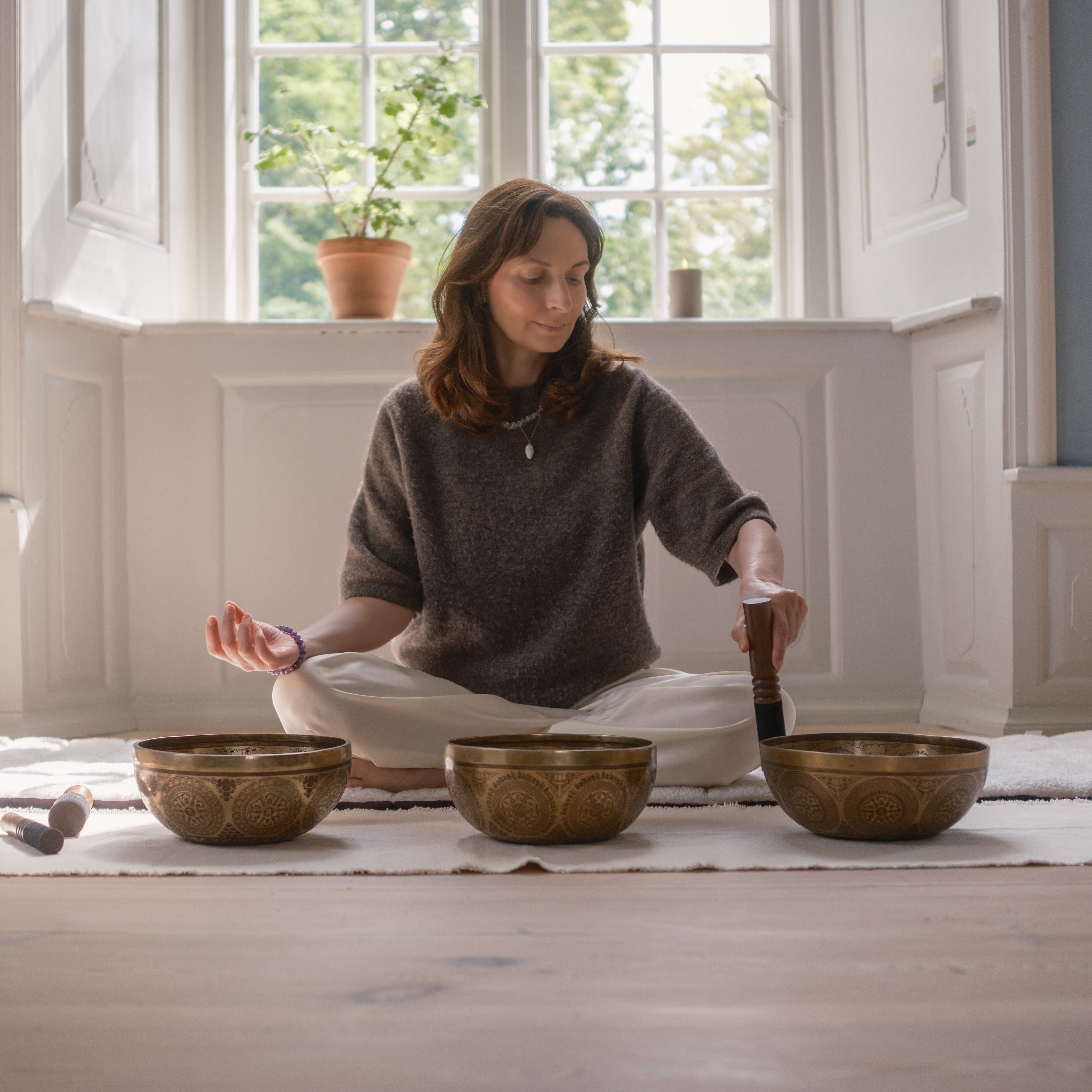
You don't need to be an expert to start playing a singing bowl. However, you do need to understand the basic techniques. This guide shows you how to hold it, strike it, and make it sing.
If you're using one of our handcrafted Himalayan singing bowls, whether the bowl is small, medium, or large. With time and practice, the movement becomes natural and the sound becomes easier to control.
Choosing the Right Mallet Before You Start
Before learning how to strike or ring a singing bowl, it’s important to understand that the mallet affects the sound. The material and softness of the mallet change the tone, vibration, and overall feel of the bowl.
The type of mallet you use affects the tone of your singing bowl. Learn more in our guide on choosing the best mallet for a singing bowl.
Step 1: Hold the Bowl Correctly
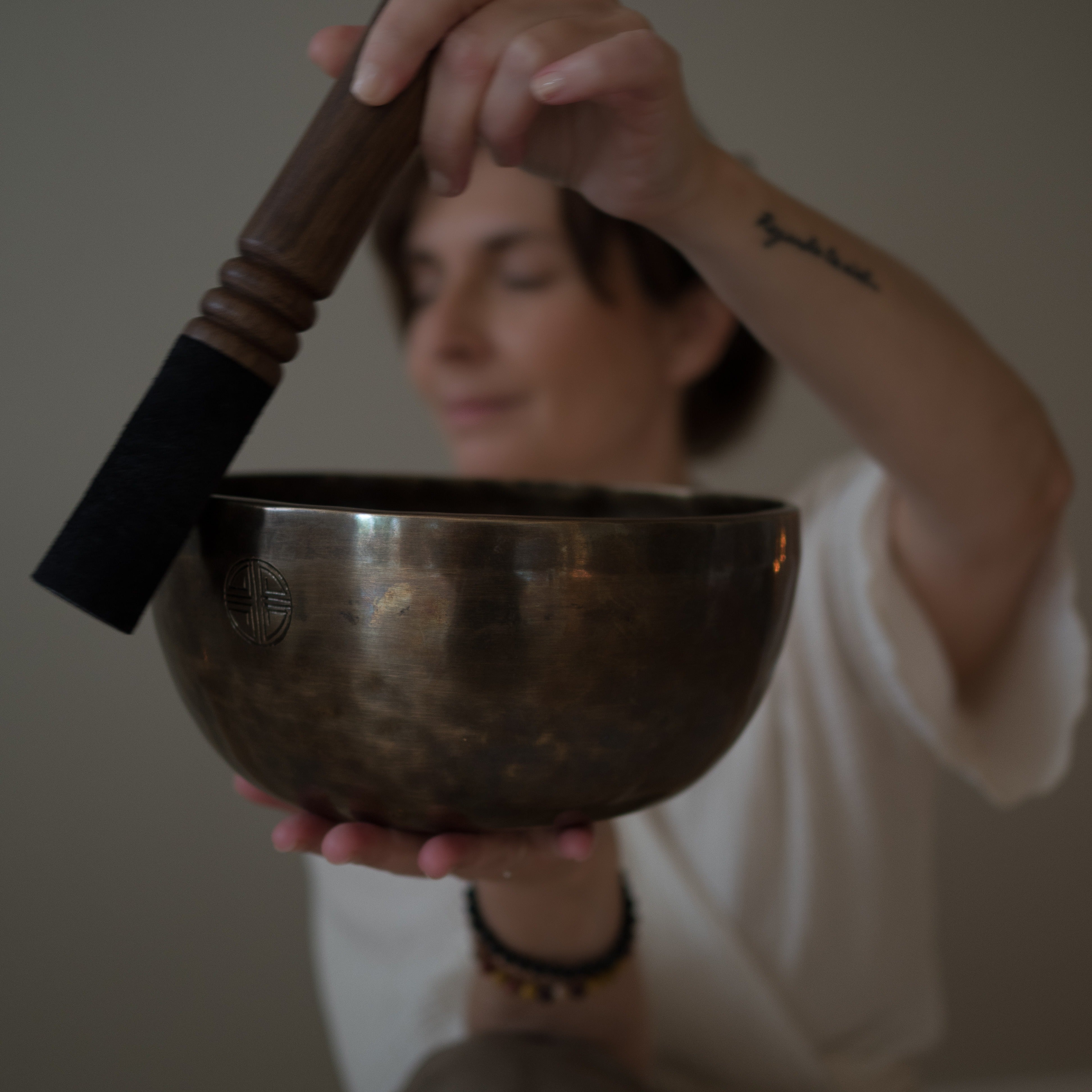
Place the singing bowl on the flat of your open palm. If the bowl is large and heavy, place it on a cushion or a mat on the ground instead of holding it.
❌ Do not grip the bowl too tightly with your fingers against the outer walls or rim.
✅ Let it rest freely in the center of your palm and only use your fingers lightly for balance.
If you grip the bowl too hard:
- The vibration gets blocked
- The sound becomes shorter
- The tone becomes weaker
- Your hand absorbs the vibration.
The bowl must be free to vibrate fully in order to produce a clear, sustained tone.

📌 Try striking the bowl once while gripping it tightly, then strike it again with your palm fully open. You’ll immediately hear the difference.
Step 2: How to Strike a Singing Bowl (The Easy Method)
Striking is the simplest way to create sound.
What to do:
- Hold the bowl on your open palm, as described in step 1.
- Hold the mallet relaxed but steady.
- Strike the outer wall gently below the rim.
- Use a gentle upward motion.
- Let the sound continue naturally.
- Do not hit too hard.
A handcrafted Himalayan singing bowl doesn't require force. It responds to a gentle and controlled strike. You should be able to hear:
- A clear tone with layered harmonics or overtones
- A long, sustainable sound
- No harsh metallic noise
✅ A lighter, controlled strike will produce a fuller and smoother tone.
❌ If the sound feels sharp or metallic, you may be hitting too hard.
Step 3: How to Make a Singing Bowl Sing (Ringing Technique)
Ringing is the method used to create a continuous sound from a singing bowl.
📌 For beginners, it’s best to strike the bowl once first, then begin the ringing motion.
What to do:
- Strike the bowl once gently, as described in Step 2.
- Hold the bowl on your open palm (or place it on a cushion if it’s large and heavy).
- Hold the mallet at a slight angle (about 45 degrees).
- Place the mallet against the outer rim.
- Apply light, even pressure.
- Slowly move the mallet clockwise around the rim.
- Gradually increase speed, if needed.
- After striking, the bowl is already vibrating. The ringing motion builds on that vibration and turns it into a steady, continuous tone.
When done correctly, you should notice a steady, continuous sound with increasing vibration and a fuller tone as it builds.
Common Mistakes When Ringing:
❌ Skipping the initial strike
❌ Pressing too hard
❌ Moving too fast at the beginning
❌ Holding the mallet flat instead of at an angle
❌ Gripping the bowl too tightly
How Singing Bowl Size Affects Sound and Playing Technique?
The size of a singing bowl influences both the sound and how comfortable it is to play.
Small bowls singing bowls are lightweight and portable, producing high-pitched brighter tones. Most can be struck and rung. However, very small bowls (an example from an image below) are generally meant to be struck only, as their limited rim surface and lighter mass make continuous ringing unstable.

Medium singing bowls are the balanced and mid-ranged ones. They can be held in the palm, struck, or rung, and they produce balanced tones with layered harmonics. Some medium bowls may feel heavier than expected. Even if they fit comfortably in the hand, holding them for extended sessions can become tiring. The weight of the bowl is therefore important to consider when choosing one.
Large singing bowls are usually placed on a cushion or mat rather than held. Their size and weight make them less practical to carry around during a session, but they compensate with deeper, more powerful tones that naturally fill larger spaces.
📌 For a more details about singing bowl sizes, please check out our Sizes and Shapes of Singing Bowls section of our comprehensive introduction to singing bowls article.
Frequently Asked Questions (FAQs)
Is it hard to learn how to play a singing bowl?
No. With using the right techniques, time and gentle practice, you will get there.
Why does my singing bowl sound metallic or harsh?
You may be striking too hard or pressing too firmly during the ringing technique. A lighter, controlled motion produces a smoother tone.
Do I need to strike the bowl before ringing it?
For beginners, yes. Striking the bowl first helps activate the vibration and makes the ringing technique easier.
Can all singing bowls be rung?
Most small and medium bowls can be rung, but very small bowls are often better suited for striking only.
Harmonize Within, Thrive Beyond.


