

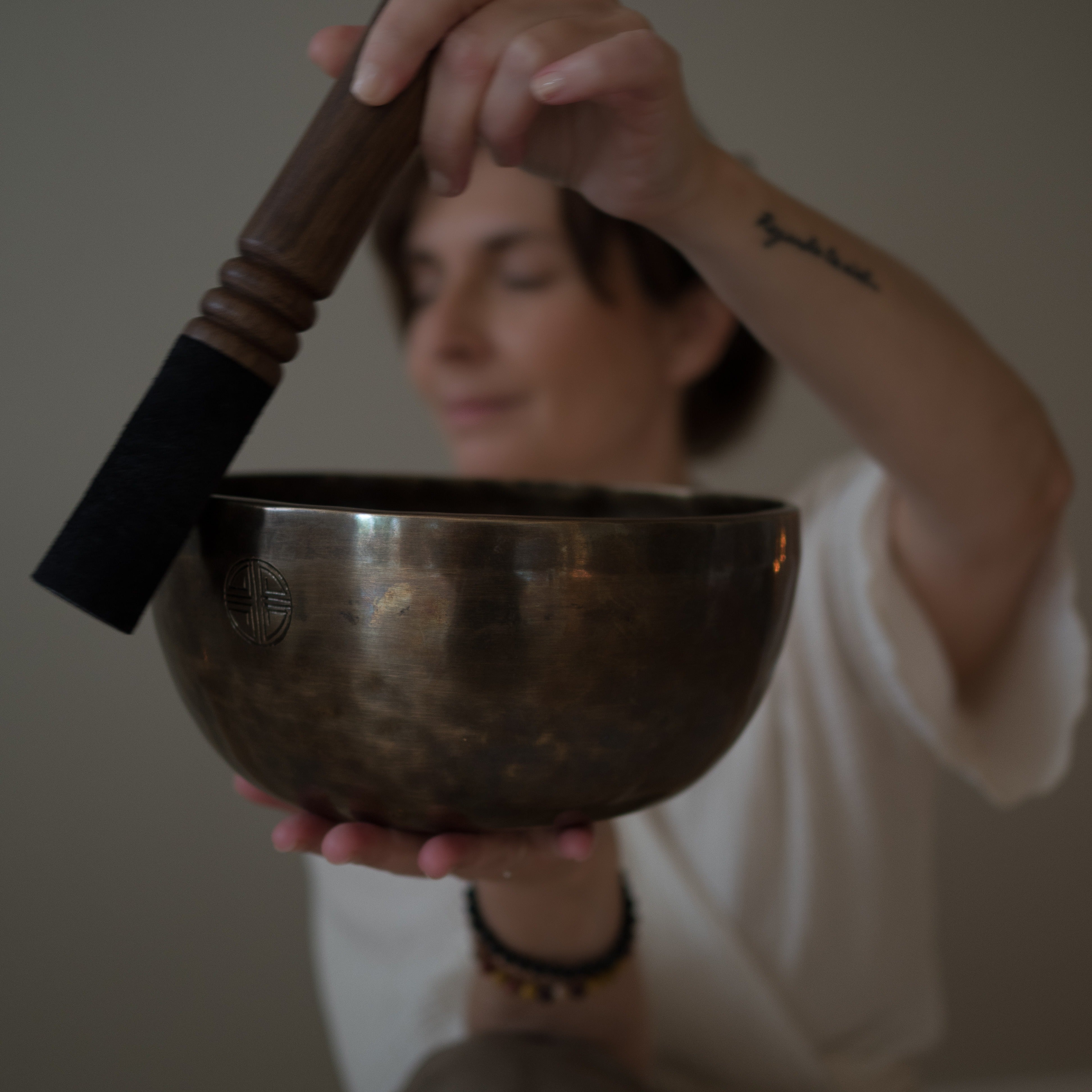









This guide explains the differences between wood, suede, and wool singing bowl mallets, how mallet size influences control on small or large bowls, and note that all mallets featured are handcrafted by Newari artisans in Nepal.
Introduction
When learning how to play a singing bowl, the mallet (also called striker or hammer) influences how the bowl responds. Even, small differences in material and grip can change the playing experience. That's why choosing the right mallet is essential.
Below is a simple guide to the most common mallets in our assortment.
Standard Mallet (Wood + Suede)

This is the standard mallet included with most singing bowls. It has:
- One end with wood
- Other end wrapped in black suede which is velvet leather
Both ends can be used to strike a singing bowl. However, they create different sound textures.
The wooden end produce a sharper tone. When striking the bowl, you may hear a clear “tac” sound at the beginning of the strike. When using the ringing technique, the exposed wood can create a brighter, more friction-based tone which can feel almost like one object gently scraping against the bowl's surface or rim.
The suede end produces a warmer and smoother sound. It grips the metal more softly using the ringing technique, allowing the vibration to develop more evenly.
📌 For beginners learning how to play a singing bowl, the suede side is often easier to control and produces a more balanced tone.
Lingam Mallet

The Lingam mallet features a suede-covered striking end and a special-shaped handle for improved grip and control.
On the opposite end, the handle is shaped in a rounded form inspired by the lingam, which is where the mallet gets its name.
The suede surface allows smooth contact when you strike or ring it. Compared to a standard singing bowl mallet, the main difference is comfort and handling rather than dramatic sound changes.
As with all playing tools, the final tone depends primarily on the bowl and your technique.
📌 Small and medium standard or lingam mallets are best suited for smaller singing bowls, while the larger ones provide more stable contact and better control when playing larger singing bowls.
Below is an example video demonstrating how a suede mallet sounds:
Red Wool Head Mallet

The Red Wool Head Mallet singing bowl mallet features a soft wool striking head and a longer wooden handle.
Compared to wood or suede mallets:
- It produces a clear and softer sound
- The tone feels smoother and less metallic
Because the wool absorbs more impact, the strike feels gentler and less sharp against the metal surface. These mallets are ideal for medium and large singing bowls.
📌 You can't use this mallet with the singing bowl using the ringing technique. You can only strike the bowl.
Below is an example video how wool-head mallets can sound like:
Final Thoughts
Each singing bowl mallet creates a slightly different sound response. Wood produces a sharper tone, suede offers smoother contact using the ringing technique with the bowl, and wool produces softer tone.
Choosing the right singing bowl mallet depends on the bowl you are playing and the sound character you prefer.
You can learn more about singing bowls here using the link.
Frequently Asked Questions (FAQs)
What is the best singing bowl mallet for beginners?
Most beginners prefer a standard singing bowl mallet with a suede end, as it provides smoother contact and makes the ringing technique easier to control.
Does the material of a singing bowl mallet affect the sound?
Yes. Wood produces a sharper and brighter tone, suede creates smoother contact for ringing, and wool softens the strike for a clearer, less metallic sound.
Can you use a wool head mallet for the ringing technique?
No. Wool head mallets are designed for striking only and are not suitable for producing sound using the ringing technique.
Does mallet size matter when playing a singing bowl?
Yes. Smaller mallets are generally better suited for smaller singing bowls, while larger mallets provide more stable contact and control when playing larger bowls.
Harmonize Within, Thrive Beyond.


