









Eyes of Buddha Singing Bowl Crown Chakra
Description
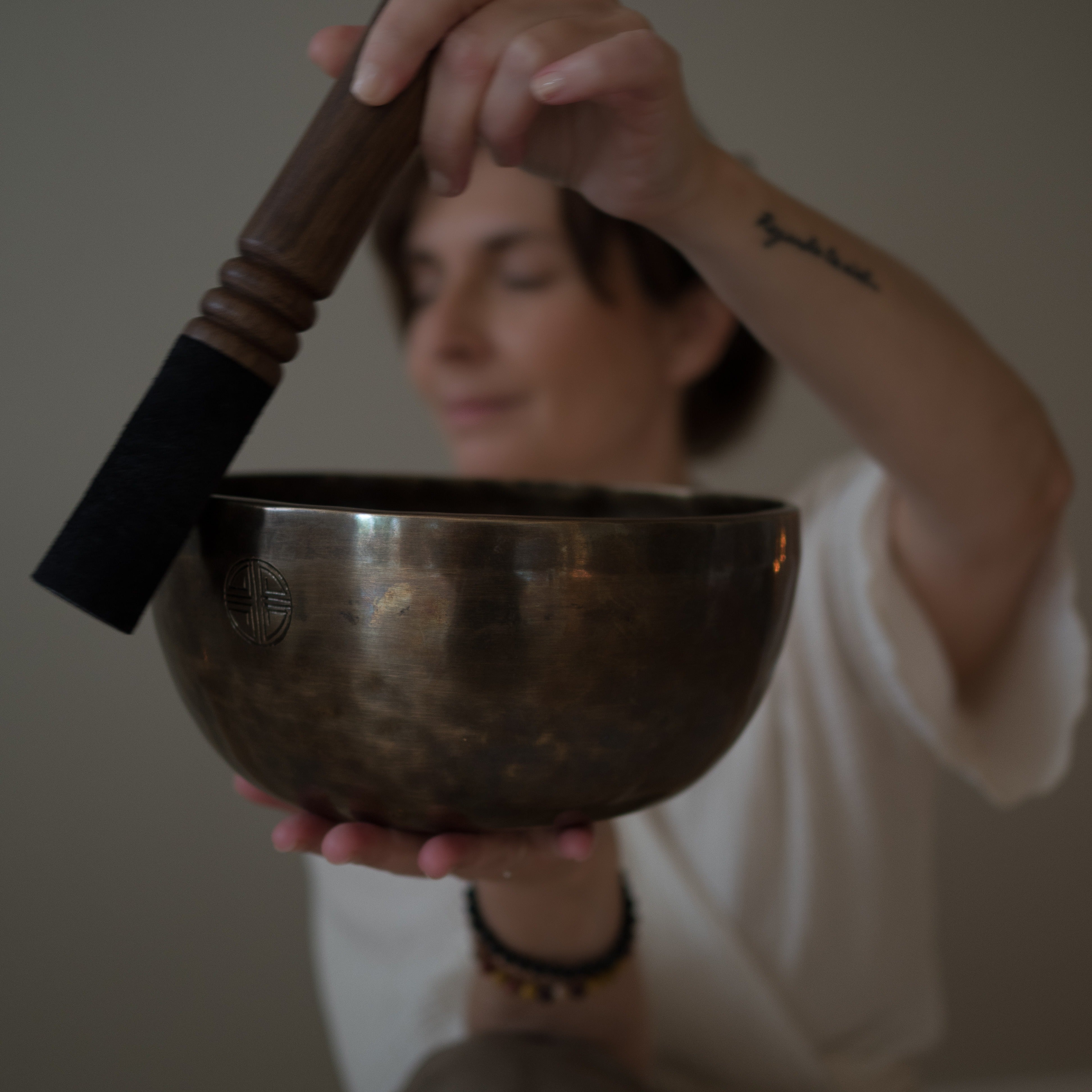
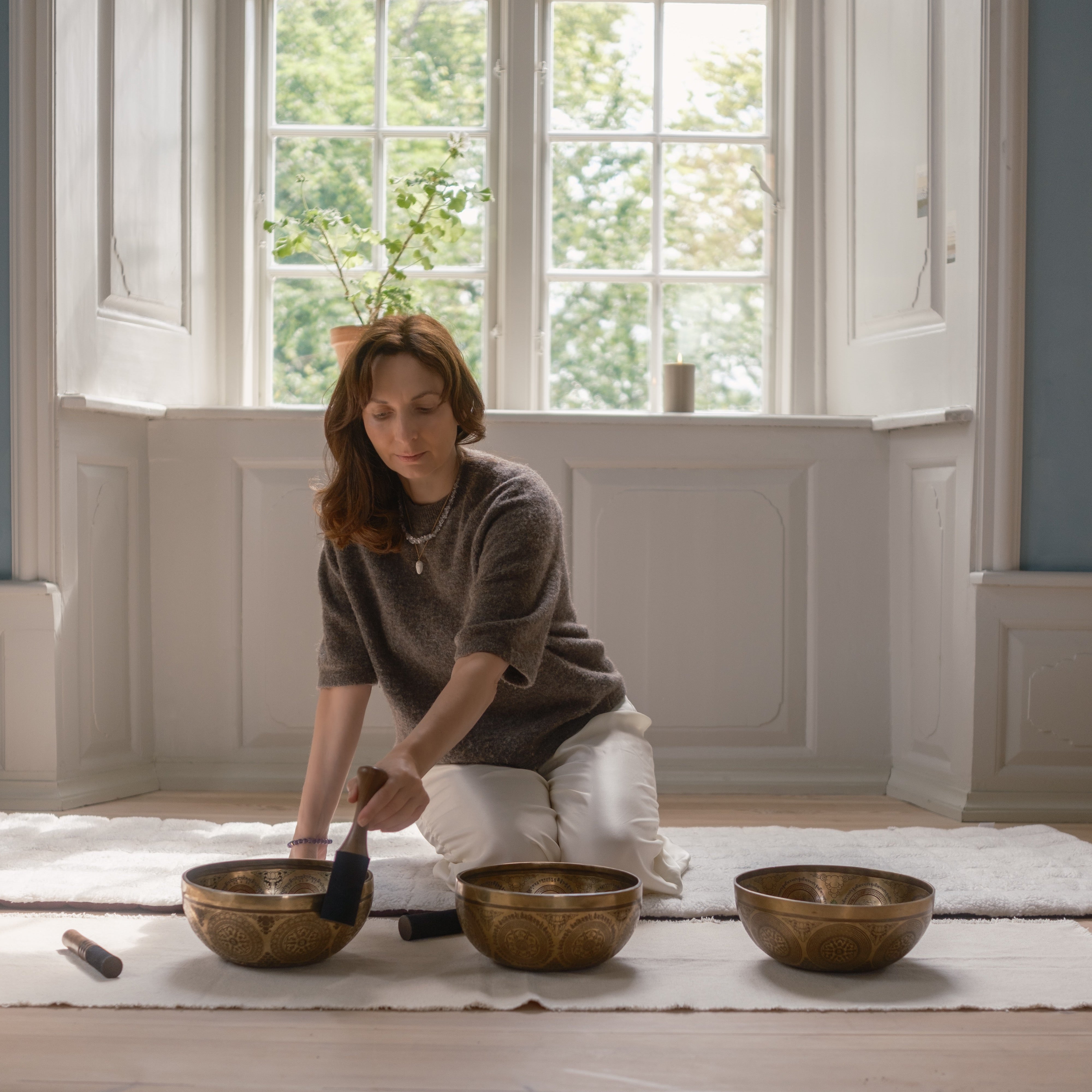
Our Eyes of Buddha singing bowl features the powerful Buddha Eyes symbol, a reminder of spiritual awareness and unity. At its center are two calm, half-closed eyes, with the urna above and a spiral below, shaped like the number "१" in Devanagari numerals, symbolizing oneness and divine insight. This sacred design gives the bowl both its name.
The singing bowl is decorated with sacred Tibetan syllables on the inner and outer walls of the bowl.
Sizes & Approximate Weights:
Since each singing bowl is handmade, size and weight may vary slightly, a reminder of their authenticity. It is around 26 cm in to diameter and weighs around 2.2 kg.
These singing bowls are handmade by our Newari artisans in Nepal, who work using traditional techniques passed down through generations. Each bowl is a labor of love, and no two are exactly alike.
Sound and Purpose
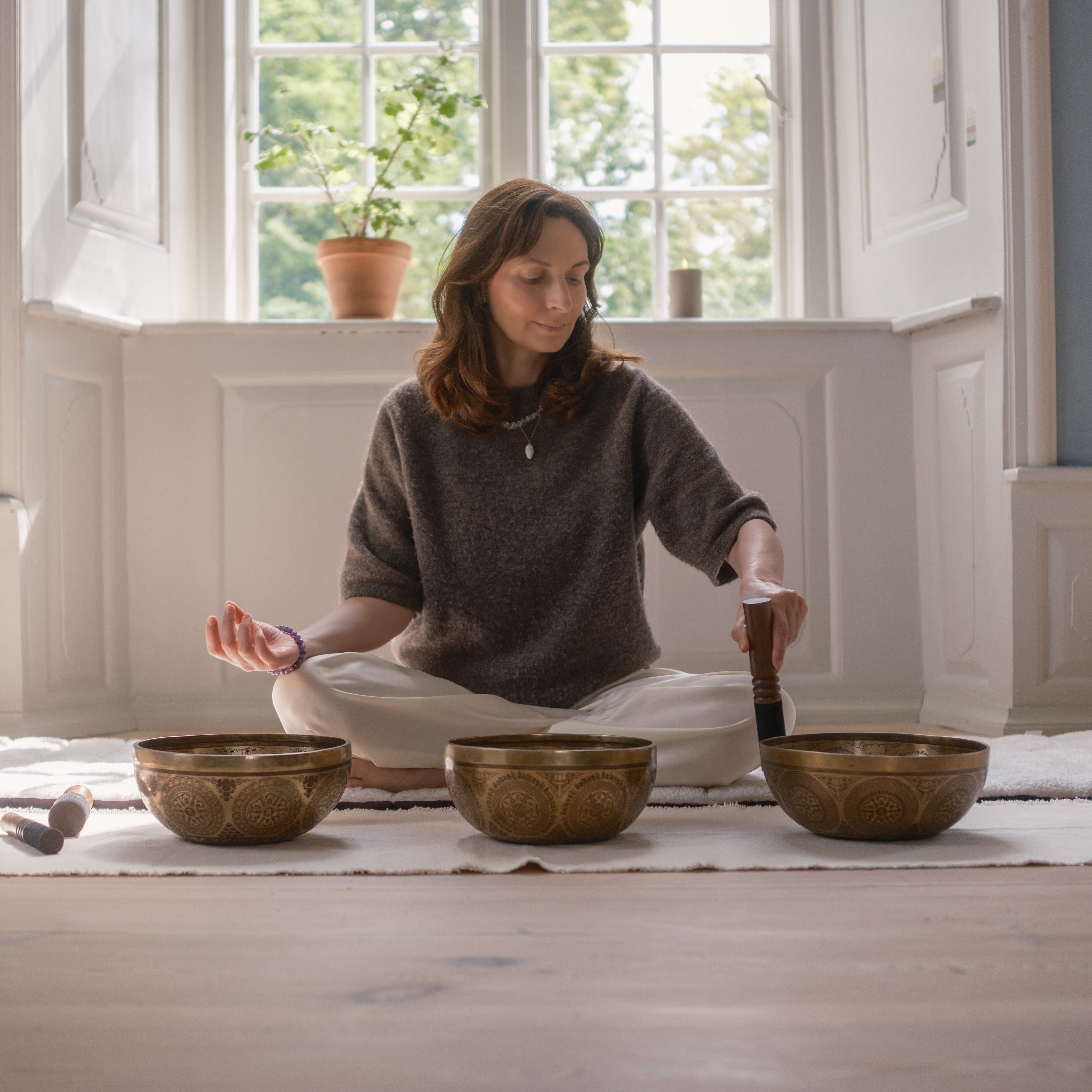
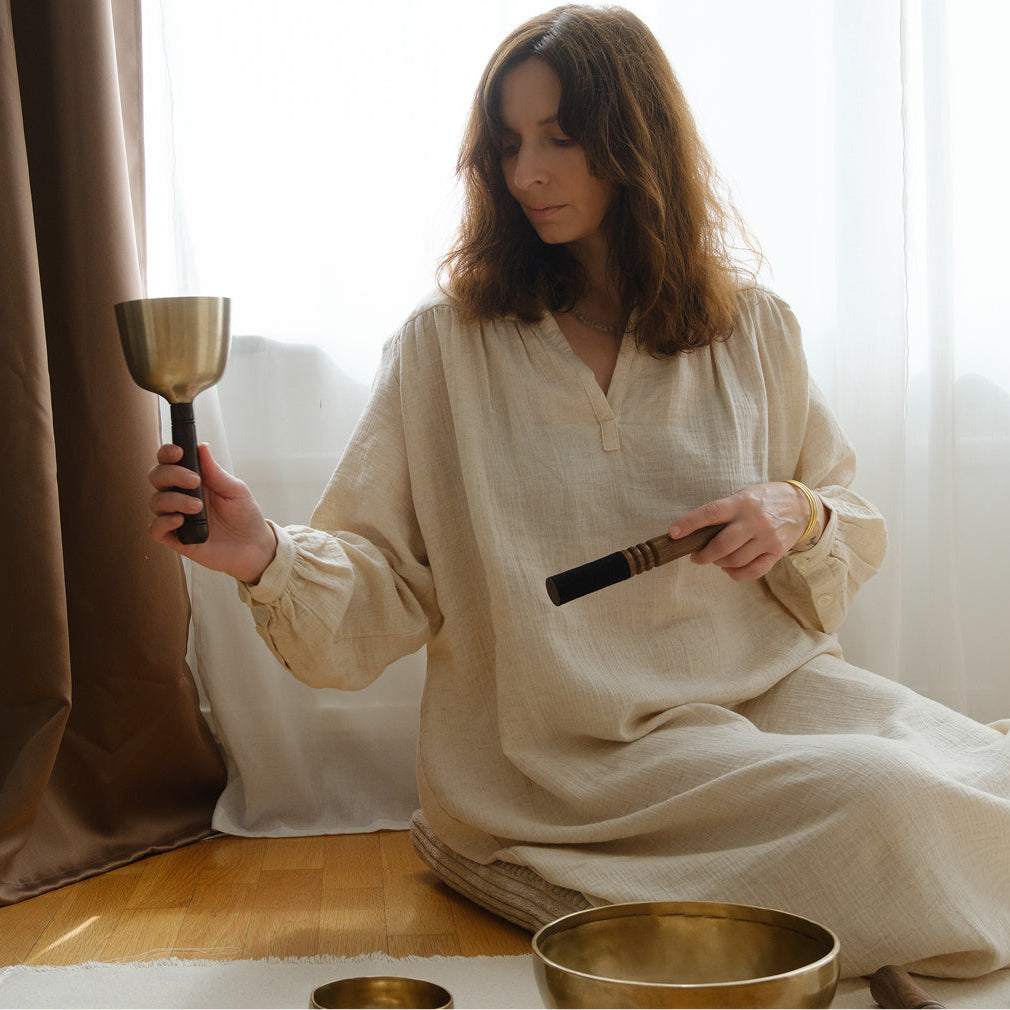
The tone of this bowl is clear, deep, and resonant with gentle overtones. Many describe the vibrations as grounding, which helps the mind settle and the heart slow down. Whether you're using it for sound healing therapy, chakra balancing, yoga and meditation practice, personal rituals, or simply to pause and reconnect, this bowl is made to support stillness.
To learn a bit more about singing bowls, here is some information that can be helpful.
Accessories Included
About Sound Recording
About Sizes & Craftsmanship
Delivery & Returns
Guides
Explore our singing bowl guides to learn more.

Usage & Benefits
Singing bowls have been used for centuries in Himalayan spiritual and meditation traditions. Today, they're widely embraced in yoga, meditation, sound healing, and wellness practices like Reiki and more.
A recent systematic review of clinical studies suggests singing bowl meditation may support relaxation, reduce stress and anxiety, and improve sleep quality and helping explain their growing use worldwide.

Traditional Hand-craftsmanship
Our singing bowls are hand-hammered by Newari artisans in Nepal using techniques passed down through generations. Each bowl starts as a flat piece of metal alloys and is gradually shaped, refined, and polished by hand. Depending on the design, it may also be etched or hand-carved with symbolic patterns.

